
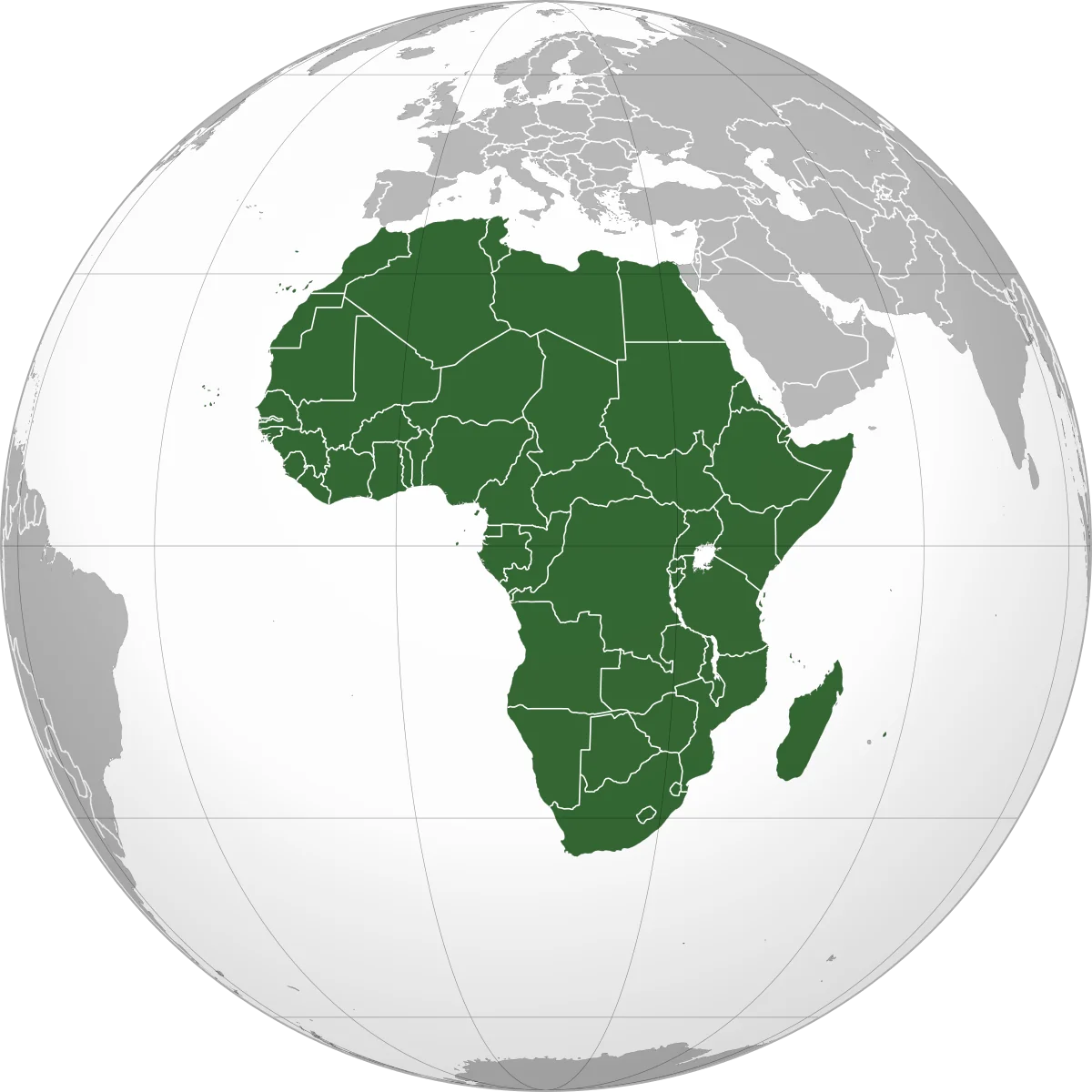
Somewhere in a wind-carved gully in Morocco, a 315,000-year-old face looks back at us. The bones from Jebel Irhoud, reanalyzed in 2017, pushed the origins of Homo sapiens deeper in time and, crucially, anchored that story on African ground. That is the quiet power behind an oft-repeated line: Africa is the only continent with fossils of our species and its ancestors at every key stage of human evolution. It is not trivia. It is the backbone of how we know who we are.
Strip away the forum debates and the national pride, and a simple pattern emerges. Africa preserves a continuous fossil trail, from the earliest upright apes to anatomically modern humans, that no other continent can match. Other regions contribute chapters, sometimes brilliant ones. Only Africa has the whole arc.
What the fossil trail actually shows
“Key stages” are not neat steps so much as overlapping milestones, a mosaic that took shape over millions of years. But if you line up the evidence, a spine of the story runs clear through Africa:
- Earliest putative hominins: Sahelanthropus tchadensis from Chad, roughly 7 million years ago, hints at early bipedality. Alongside it, Orrorin tugenensis in Kenya, about 6 million years old, and Ardipithecus ramidus in Ethiopia, 4.4 million years old, help mark the pivot toward walking upright. See the overviews at the Smithsonian Human Origins Project.
- Australopiths, the small-brained bipeds: Australopithecus afarensis (Lucy) in Ethiopia at 3.2 million years, and southward species like A. africanus, define the body plan that freed hands for tools.
- Early Homo and technology: In East Africa, Homo habilis appears a bit over 2 million years ago, alongside the Oldowan tool tradition that began around 2.6 million years ago at Gona, Ethiopia (Smithsonian on Oldowan). By 1.76 million years ago, Acheulean handaxes emerge in Kenya, a leap in planning and symmetry (PNAS on Acheulean earliest evidence).
- First expansions: African Homo erectus and kin walk out. The Dmanisi fossils in Georgia, about 1.8 million years old, are the earliest solid footprints of hominins beyond Africa (Nature coverage).
- Archaic humans within Africa: By about 300,000 years ago, fossils like Kabwe in Zambia and many others show large-brained, robust faces often grouped as Homo heidelbergensis or H. rhodesiensis (Kabwe overview).
- Early Homo sapiens: Jebel Irhoud in Morocco recalibrated the clock to roughly 315,000 years ago (Nature, 2017). In Ethiopia, the Omo Kibish fossils have been re-dated to at least 233,000 years ago (Nature, 2022), while Herto in the Middle Awash, about 160,000 years old, shows very modern anatomy.
- Behavioral depth: Long before cave art in Europe, African sites record symbolic behavior. At Blombos Cave in South Africa, a 73,000-year-old engraved drawing and personal ornaments point to abstract thought and social signaling (Nature, 2018).
From the first tentative biped to fully modern humans, Africa is the only continent with fossils at every rung of that ladder.
None of this denies the rich human story elsewhere. Europe had Neanderthals, Asia had Denisovans and other enigmatic cousins, and Southeast Asia hosted Homo floresiensis and Homo luzonensis. There were early forays by our own species too, from Israel’s Misliya Cave around 180,000 years ago to a 210,000-year-old skull in Greece. Many of those early waves seem to have fizzled or been replaced, which is why the unbroken scaffolding still sits in Africa.
All living people whose ancestors left Africa carry about 1 to 2 percent Neanderthal DNA, with additional Denisovan segments in parts of Asia and Oceania, a genetic echo of meetings on the road out (Max Planck Neanderthal project).
The genetics that keeps doubling down
If fossils wrote the first draft, genetics edited it in pen. Mitochondrial DNA, Y-chromosomes, and whole genomes converge on an African origin for modern humans in roughly the last 300,000 years. The highest genetic diversity on Earth sits in Africa, a hallmark of a deep and persistent population history there, while non-African genomes display the bottlenecks you would expect from small groups moving out.
The most up-to-date models sharpen the picture. Rather than a single cradle, researchers see a web of semi-connected populations across Africa, exchanging genes over long periods. In 2023, a Nature study described a “weakly structured stem,” multiple African populations whose long mixing produced what we now call Homo sapiens (Nature, 2023). That fits the patchwork fossil record, where North, East, and southern Africa all preserve faces and tools that look modern in some traits and archaic in others.
The center of gravity remains the same, genetics keeps pointing back to Africa even as the story inside the continent grows more complex.
Once humans left in earnest, probably in pulses between about 70,000 and 50,000 years ago, they encountered other hominins and sometimes had children with them. Tibetan highlanders later inherited a Denisovan gene that helps blood carry oxygen at altitude, an elegant example of admixture as adaptation (Nature on EPAS1).
Objections, blind spots, and why the Sahara matters
Could future finds outside Africa push the earliest stages of our lineage elsewhere? Science is not a flag you plant, it is a case you build. Preservation is biased, humid tropics eat bone, and exposed rift valleys and caves in Africa give paleontologists unfair advantages. It is more precise to say Africa is the only place where we have found fossils at each critical stage, not necessarily the only place they ever existed. That distinction respects both the data and the possibility of surprise.
What about claims from China that seek a local origin for modern humans? The country’s sites are indispensable for understanding Asian prehistory, from Denisovan diversity to the striking Harbin skull. But the ancient DNA verdict is consistent: modern human genomes trace back to Africa, with limited archaic admixture outside. Competing regional-origin models have not survived contact with the genetic data.
The Sahara often shows up in these debates as a wall. It was not always. North Africa and Arabia flickered green many times, as Earth’s slow orbital cycles shifted monsoons. During these African Humid Periods, lakes dotted the desert, grasslands stretched across today’s dunes, and migration corridors opened and shut like valves (NASA Earth Observatory on the Green Sahara; Science Advances on humid cycles). These windows help explain early H. sapiens footprints and fossils in Arabia, such as the 85,000-year-old finger bone from Al Wusta (Nature Ecology & Evolution).
One more sober note. For all the headlines, the fossil record of our family would still fit into a couple of museum vaults. Whole regions and time slices are under-sampled. Ancient DNA has transformed Eurasian prehistory, yet African aDNA remains hard to recover in hot climates. That is changing, slowly, as techniques improve and as community-led projects expand beyond a handful of well-known sites (Science review of ancient African genomes).
So why should anyone care whether fossils at every rung come from Africa? Because origin stories carry weight. They shape how schoolbooks are written, how museums frame exhibits, how funding flows, and how countries relate to their deep pasts. They also correct our intuitions. Many of the behaviors we label as the “human spark,” symbolic markings, personal adornment, long-distance exchange, do not debut in Ice Age Europe. They appear earlier in African caves, dunes, and riverbanks, as part of a longer, richer evolution.
Keep an eye on three fronts. North Africa and the Sahara’s edges are turning up older and more modern-looking fossils than expected. The Arabian Peninsula is emerging as a critical bridge that records when and how people left. And within Africa, from Ethiopian rifts to South African dolomitic caves, researchers are revisiting classic sites with new tools, re-dating layers, and finding that timelines shift when the clocks get better.
If the Jebel Irhoud face had eyebrows, they might arch at our urge for simple answers. The evidence is telling a different story, one both humbler and grander. Africa contains the through line of our fossil history, and the more we listen to what those bones and genes are saying, the more intricate our origin becomes.