
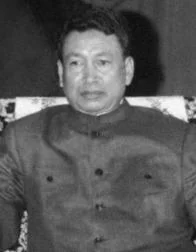
The Khmer Rouge killed intellectuals and city dwellers because the movement embraced an extreme agrarian, anti-urban ideology that cast educated people, professionals, and anyone linked to the old society as enemies of a new peasant utopia. Under Pol Pot’s rule from 1975 to 1979, cities were emptied, money and markets were abolished, and suspected “intellectuals” were executed or worked to death in rural labor camps. In practice, even signs of literacy or education, such as speaking a foreign language or wearing glasses, could be treated as evidence of treason.
What was the Khmer Rouge?
The Khmer Rouge was a radical communist movement that seized power in Cambodia in April 1975 and established Democratic Kampuchea under the leadership of Pol Pot. The regime sought to rebuild the country as a self-sufficient, classless agrarian society, which meant dismantling urban life, erasing markets, and eliminating perceived class enemies. Cities were evacuated at gunpoint, schools and hospitals were closed, religion was suppressed, and the population was forced into agricultural collectives and work brigades (Britannica).
Between 1.5 and 2 million Cambodians, roughly a quarter of the population, died from execution, forced labor, starvation, and disease during 1975–1979 (United States Holocaust Memorial Museum).
Why did the Khmer Rouge target intellectuals and city dwellers?
The regime defined “new people” from cities and “old people” from the countryside. It portrayed urban residents, civil servants, teachers, doctors, monks, business owners, and anyone with education as the backbone of a capitalist, colonial, and corrupt past. Eliminating that past was considered essential to build a peasant-led future. In revolutionary propaganda, intellectuals were suspected of disloyalty, individualism, and resistance to collectivization.
In reality, targeting was broad and often arbitrary. Local cadres, operating under pressure to find “enemies,” used crude markers of education or social status. Former soldiers of the prior regime, ethnic and religious minorities, and people accused of hoarding food or opposing orders were also swept up. The result was a climate of fear in which confession under torture and summary execution became routine, especially in prisons like S-21 (Tuol Sleng) in Phnom Penh (Britannica) (Tuol Sleng Genocide Museum).
Did the Khmer Rouge really kill people for wearing glasses?
Yes, in many areas possession of books, speaking a foreign language, or even wearing glasses could be taken as signs that a person was educated and therefore suspect. Not everyone with spectacles was automatically executed, but such visible cues increased the risk of arrest and death. This reflected the regime’s extreme anti-intellectualism and its belief that rebuilding society required purging “contaminating” urban and educated influences (Britannica: Pol Pot).
Investigators have documented more than 20,000 mass grave sites across Cambodia from the Khmer Rouge era, corroborating widespread, often arbitrary killing across the country (Yale Cambodian Genocide Program).
How were people killed, and who else was targeted?
Deaths came from several overlapping policies and practices:
- Execution: Suspected “enemies” were killed at work sites, cooperatives, and prisons such as S-21, typically without due process (Tuol Sleng Genocide Museum).
- Forced labor and starvation: Grueling agricultural quotas, inadequate rations, and bans on private cooking led to mass death from exhaustion and malnutrition (USHMM).
- Medical neglect and disease: Abolishing modern medicine and dismantling hospitals meant treatable illnesses became fatal.
Beyond professionals and urban residents, the regime persecuted ethnic and religious minorities, including Cham Muslims and ethnic Vietnamese, some of which has been legally recognized as genocide in later trials (Extraordinary Chambers in the Courts of Cambodia).
How did the Khmer Rouge regime end?
The regime collapsed after it launched cross-border attacks on Vietnam. In late 1978 Vietnam invaded, and in January 1979 it ousted the Khmer Rouge and installed a new government in Phnom Penh. Pol Pot and core cadres fled to border areas and continued insurgency for years, but their rule over the country ended in 1979 (Britannica).
Was anyone held accountable?
Accountability came late. The UN-backed Extraordinary Chambers in the Courts of Cambodia (ECCC), also called the Khmer Rouge Tribunal, began operating in 2006. It issued a handful of landmark convictions: the S-21 prison chief Kaing Guek Eav (Duch) in 2010, and senior leaders Nuon Chea and Khieu Samphan in 2018 for crimes against humanity and, in part, genocide against the Cham and Vietnamese (ECCC case summaries). Pol Pot died in 1998 while under Khmer Rouge control and was never tried. Many mid-level perpetrators were never prosecuted.
Legal accountability confirmed that the mass persecution of “intellectuals,” urban residents, and minority communities was not random violence, it was integral to the regime’s plan to remake Cambodian society.