
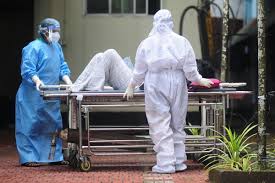
Nipah virus is a zoonotic virus carried by fruit bats that spreads to people through direct contact with infected animals, contaminated food, or the body fluids of an infected person. Most transmission happens in close-contact settings such as households and healthcare, and there is no evidence of sustained airborne spread. Outbreaks occur nearly every year in parts of South Asia, with reported fatality rates of about 40 to 70 percent, which is why health authorities take even small clusters seriously.
What is Nipah virus?
Nipah virus is a member of the Paramyxoviridae family that causes severe disease in people and some animals. Its natural reservoirs are fruit bats of the genus Pteropus, also called flying foxes. The virus was first identified in 1999 during an outbreak linked to pig farms in Malaysia and Singapore. Since then, outbreaks have been reported in Bangladesh and India most frequently, with occasional events in Malaysia, Singapore, and the Philippines. The CDC notes that Nipah outbreaks occur nearly every year in parts of Asia.
WHO and CDC classify Nipah as a high-consequence zoonotic disease because it can spill over from animals to people, cause severe illness, and spread in close-contact settings.
How does Nipah virus spread?
Nipah reaches people through several routes, often starting with an animal-to-human spillover, then sometimes followed by limited person-to-person spread:
- Animal to human. Contact with infected bats or pigs can transmit the virus. In Bangladesh, drinking raw date palm sap contaminated by bat saliva or urine and eating fruit soiled by bats have been documented risk factors, according to WHO.
- Foodborne contamination. Fruit or fresh sap exposed to bats can carry the virus. Boiling sap and washing or peeling fruit reduces risk.
- Person to person. Close contact with the blood, respiratory secretions, or other body fluids of someone with Nipah can spread infection, especially among caregivers and healthcare workers without proper protection, per the CDC.
Available evidence indicates Nipah does not transmit efficiently between people. Analyses of Bangladesh outbreaks estimate the effective reproduction number below 1, which limits sustained chains of transmission in the community (NEJM, 2019).
Nipah spreads through close contact with body fluids or contaminated food, not through long-range airborne transmission like measles.
What are the symptoms and incubation period?
Nipah can range from mild illness to fatal encephalitis, which is swelling of the brain. Early symptoms often include:
- Fever and headache
- Cough or sore throat, and difficulty breathing
- Fatigue and body aches
Severe disease can progress to confusion, drowsiness, seizures, and coma. The CDC reports that coma can develop within 24 to 48 hours in severe cases. Most people develop symptoms 4 to 14 days after exposure, although WHO has documented rare incubations up to 45 days.
Typical incubation is 4 to 14 days, but rare cases have taken up to 45 days to show symptoms, according to WHO.
How deadly and how contagious is Nipah?
Case fatality rates vary by outbreak and clinical care availability, generally ranging from 40 to 70 percent, as summarized by the CDC and WHO. Survivors can experience long-term neurological problems, including persistent seizures or personality changes.
By contrast, transmissibility is relatively low. Epidemiologic studies in Bangladesh have found most introductions do not lead to large chains of transmission and estimated reproduction numbers below 1 (NEJM, 2019). This pattern is very different from highly contagious respiratory viruses such as measles or pandemic waves of SARS-CoV-2. Even so, hospital and household clusters can occur without strict infection control.
Is there a vaccine or treatment for Nipah?
There are currently no licensed vaccines or specific antivirals for Nipah. Care is supportive, including management of breathing problems, fluids, and treatment of complications (CDC). Several countermeasures are in development:
- Vaccine candidates. Early stage human trials have begun for experimental vaccines, including a ChAdOx1 Nipah candidate led by researchers at the University of Oxford (University of Oxford).
- Antivirals and antibodies. Laboratory and animal studies suggest activity of some agents, for example remdesivir showed protection in a primate model, but none are approved for clinical use (Sci Transl Med, 2019).
How can people reduce risk, and what does this mean for global health?
For travelers or residents in regions with Nipah activity, public health agencies advise practical steps:
- Wash hands regularly with soap and water.
- Avoid contact with bats, sick pigs, and areas where bats roost.
- Do not drink raw date palm sap, and avoid fruit that may be soiled by bats.
- Use appropriate protective equipment when caring for someone with suspected Nipah, and follow infection control guidance in healthcare settings.
Globally, the current risk of widespread community transmission is low because human-to-human spread is inefficient, but rapid detection and control are vital to prevent healthcare and household clusters. WHO lists Nipah as a pathogen with pandemic potential, which means it warrants surveillance, research, and preparedness, not that a pandemic is likely. Accurate information, targeted precautions, and strong healthcare infection control are the most effective tools today.