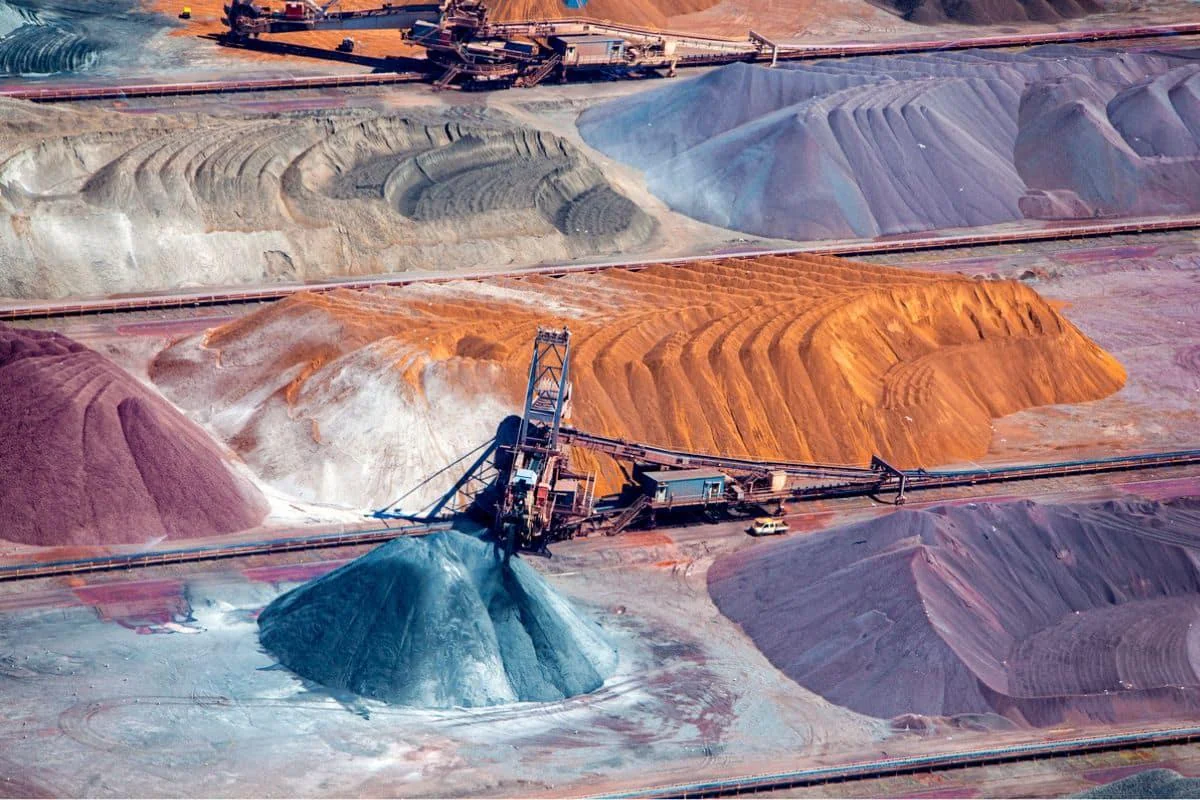
No, geologists did not discover a new $6 trillion iron ore deposit in Australia. The viral posts misinterpret a peer reviewed study that re dated existing deposits in Western Australia’s Hamersley Province. The research refined when these known deposits formed, it did not announce a new deposit, estimate new tonnages or grades, or assign a dollar value.
What is the claim?
Social posts and low quality articles have circulated headlines about a “world’s largest” iron ore deposit in the Hamersley region worth trillions of dollars. They often mention 55 billion tonnes at more than 60 percent iron but provide no location, operator, technical report, or regulatory filings.
The headlines are not supported by the underlying science or by any official resource disclosure.
What did the research actually find?
The widely cited work comes from a team led by Curtin University that precisely dated iron ore in the Hamersley Province using uranium lead measurements inside iron oxide minerals. The team showed that enrichment of banded iron formations into high grade ore occurred about one billion years later than previously thought, during a period of intense tectonic activity.
Curtin reports the Hamersley deposits formed between about 1.4 and 1.1 billion years ago, not around 2.2 billion years ago as long assumed (Curtin University, summarizing the study published in PNAS).
This is an age re interpretation of already known and heavily mined deposits across the Pilbara, it is not a discovery of a new orebody.
How do geologists date iron ore deposits?
Most Pilbara iron ore started as banded iron formations, ancient marine sediments with alternating iron rich and silica rich layers. Later fluids and heat transformed parts of these rocks into high grade hematite ore, often over 60 percent iron. The Curtin led team applied in situ uranium lead geochronology to tiny domains within iron oxides like hematite to determine when this enrichment happened.
By tying ore formation to a specific window of supercontinent breakup and reassembly, the work strengthens models that connect deep Earth tectonics to mineralizing fluids, which can help target future exploration.
Is there a new “world’s largest deposit” in Hamersley?
No. The Hamersley Province already hosts the largest cluster of iron ore deposits on Earth as a region, mined for decades by companies such as BHP, Rio Tinto, Fortescue and Roy Hill. The new paper does not identify a new giant orebody, nor does it expand the size of existing deposits. Western Australia remains the world’s leading iron ore producer, and iron ore was Australia’s largest export earner in the last financial year, as Curtin notes in its release.
There is no new 55 billion tonne single deposit announced, and no official valuation assigned by the researchers or regulators.
If a truly unprecedented deposit were discovered, you would expect:
- Specific location details and maps
- A technical resource statement under the JORC Code in Australia, often via an ASX announcement (JORC)
- Regulatory filings and government geological updates, for example from Geoscience Australia or WA’s Department of Energy, Mines, Industry Regulation and Safety
- Statements from the company that holds the exploration or mining lease
Why are dollar value headlines misleading for mineral deposits?
Putting a single price tag on an in ground resource ignores the realities of mining and markets. Even for known high grade hematite, value depends on:
- Ore grade, tonnage, geometry and cut off assumptions
- Infrastructure, mining and processing costs, energy and water
- Royalties, taxes, approvals, heritage and environmental obligations
- Iron ore price volatility and product discounts or premiums
- Financing terms and time value of money
Responsible resource estimates are reported as resources and reserves under standards like JORC, not as headline dollar figures.
What does this mean for exploration and Earth history?
The study strengthens the link between supercontinent cycles and the timing of iron ore enrichment. That insight can guide exploration in other iron districts hosted by banded iron formations, such as parts of Brazil and South Africa, by focusing on regions that experienced similar tectonic and fluid flow events during the 1.4 to 1.1 billion year timeframe.
For the Pilbara, the practical takeaway is improved geological context for deposits that are already in production, not a sudden addition of a new trillion dollar orebody.