How certification, traceability, testing, and low-volume production make some helicopter fasteners cost thousands of dollars, and why you cannot substitute generic hardware.
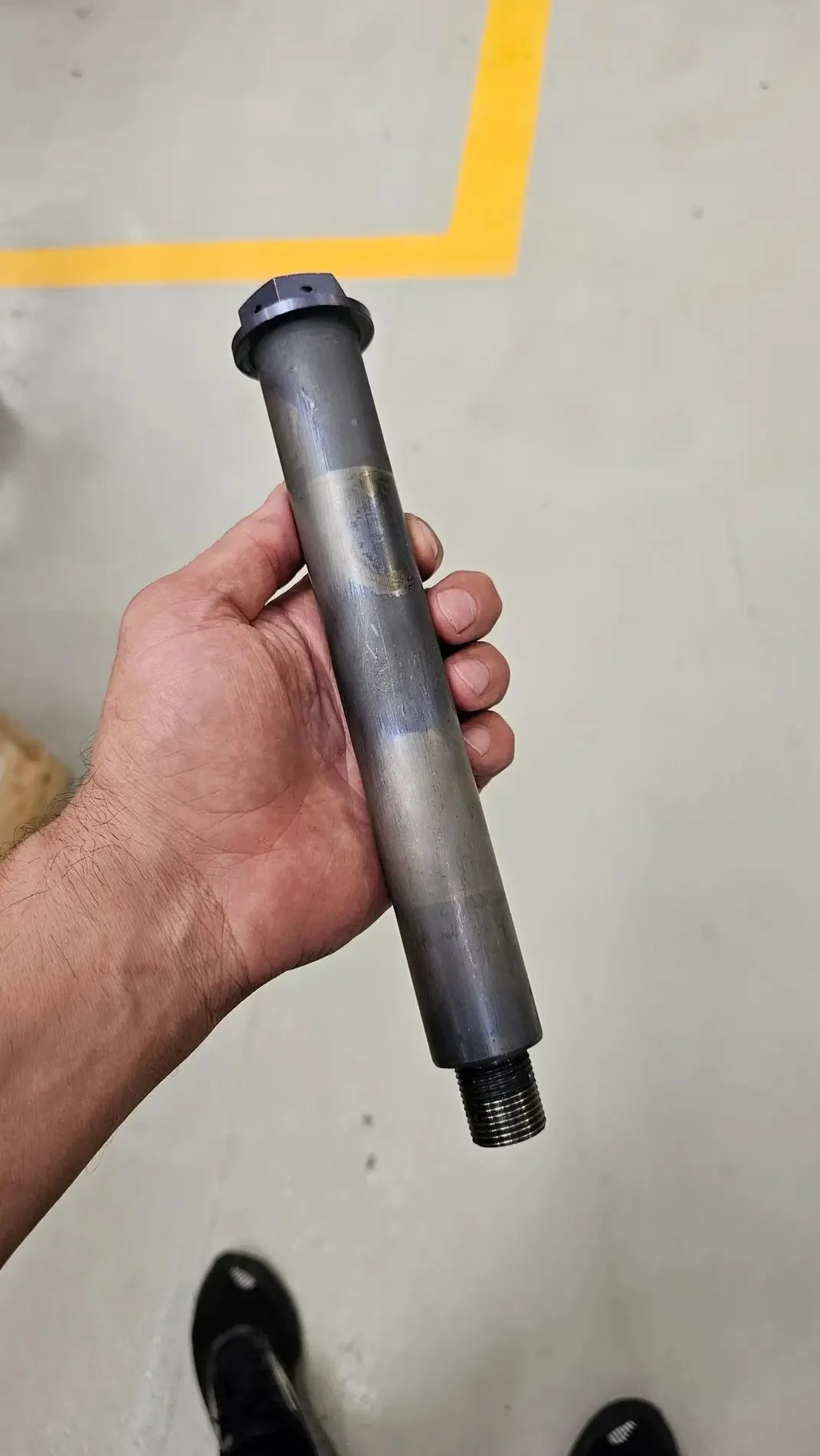
A helicopter bolt can cost $8,000 because the price reflects certification, traceability, specialized materials and processing, and liability in a safety-critical, low-volume industry. In many cases the metal itself is a small fraction of helicopter bolt cost, the majority is the documentation and quality assurance needed to prove the part is airworthy. Installing an unapproved or undocumented bolt is illegal and unsafe.
What is a helicopter bolt?
In aviation, structural bolts are not generic hardware. They are engineered aerospace fasteners used in rotor hubs, control linkages, transmissions, landing gear, and structural joints. These bolts must hold precise preload, resist vibration, and survive extreme cyclic loads without loosening or cracking. Many conform to NAS, MS, or AN specifications, with controlled materials, heat treatment, coatings, and tight dimensional tolerances documented in the design data. A notorious example is the “Jesus bolt” at the rotor mast on some types, but most expensive bolts are less famous and still vital.
What drives helicopter bolt cost?
- Certification and approval: Parts must be produced under an FAA or EASA approved system and traceable to an approved design, which adds significant overhead (14 CFR Part 21).
- End-to-end traceability: Every step from raw material heat lot to machining, special processes, and inspection is documented. If that chain breaks, the part is scrap.
- Specialized materials and processes: Controlled alloys, heat treat, shot peening, and protective coatings reduce fatigue and corrosion but require qualified suppliers and audits.
- Rigorous inspection and test: Dimensional checks, proof load, torque-tension correlation, and nondestructive testing add time and cost.
- Low production volume: Helicopter models use comparatively few of any given bolt, so fixed costs are spread over small batches.
- Liability and compliance: Safety-critical parts carry substantial documentation, configuration control, and product liability burdens.
FAA guidance requires that replacement parts be identifiable, traceable to an approved design or production approval, and accompanied by documentation proving eligibility and airworthiness (AC 20-62E).
How do certification and traceability add cost?
Manufacturers must operate under approved quality systems and controls. In aerospace this is commonly the AS9100 quality management standard, which adds supplier audits, corrective action systems, calibrated tooling, and training requirements (IAQG AS9100 overview). First production runs often require AS9102 First Article Inspection, a comprehensive verification of materials, dimensions, and processes against the design.
Airworthiness release documentation is also costly to maintain. New or overhauled parts are typically shipped with an FAA Form 8130-3 authorized release certificate (FAA 8130-3) or an EASA Form 1. These documents tie the physical bolt to its approved design data, production approval, and inspection history.
The 8130-3/EASA Form 1 is the aviation industry’s standard “birth certificate” for parts, linking the serial or batch to approved design and production, and attesting to airworthiness at release.
What testing and materials make aerospace fasteners different?
Helicopter bolts see high-frequency cyclic loads and vibration that can loosen hardware and initiate microcracks. Design accounts for preload, torque-tension variation, lubrication, and fatigue safety factors. NASA’s Fastener Design Manual explains why fastener reliability is critical and how specialized processing mitigates failure modes (NASA Fastener Design Manual).
Inspection is more intensive than in consumer hardware. Manufacturers use nondestructive testing such as magnetic particle, dye penetrant, and ultrasonic inspections to detect subsurface flaws and verify heat treatment, supported by FAA NDI guidance (FAA NDI Program).
Aerospace fasteners are engineered for controlled preload, fatigue resistance, corrosion protection, and vibration mitigation, then verified through process certification and NDI rather than simple visual checks.
Is it just paperwork markup?
“Paperwork” is shorthand for real work: qualifying suppliers, validating processes, auditing quality systems, and demonstrating conformity to an approved design. The raw machining cost of a bolt might be modest, but the required approvals, inspections, and documentation ensure that a specific physical bolt is safe to install on a specific aircraft. In practice, both the engineered manufacturing and the compliance infrastructure contribute substantially to price.
Can you use a cheaper bolt or 3D print one?
No. Installing undocumented or unapproved parts violates maintenance rules and creates a serious safety risk. In the United States, replacement parts must be OEM, TSO, or PMA parts produced under a Parts Manufacturer Approval, and maintenance must follow 14 CFR Part 43. The FAA also runs a Suspected Unapproved Parts program to keep counterfeit or undocumented parts out of service.
What documents prove an airworthy bolt?
For legitimate aviation parts, expect a paper trail like:
- FAA Form 8130-3 (or EASA Form 1) authorized release certificate
- Certificate of Conformance from an approved production organization
- Material and heat treatment certifications, including heat lot traceability
- Records of special processes (plating, shot peen) by approved suppliers
- Inspection reports, possibly including AS9102 First Article Inspection
- For life-limited items, status records per 14 CFR 43.10