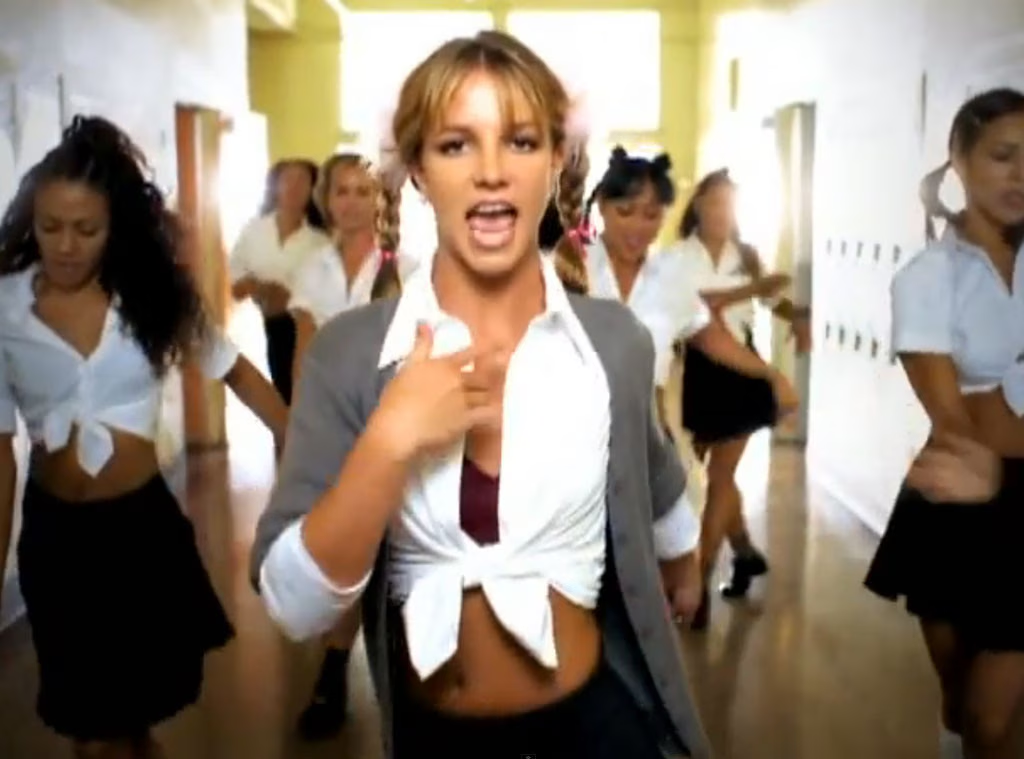
In Britney Spears’ debut single “…Baby One More Time,” the phrase “hit me” means “contact me,” as in “hit me up,” not physical violence. The song’s Swedish writers, Max Martin and Rami Yacoub, used the slang to mean “call me” or “give me a sign,” which fits the surrounding lyrics. To avoid confusion, Jive Records removed “Hit Me” from the official title, releasing it simply as “…Baby One More Time.”
What does “hit me” mean in “…Baby One More Time”?
Within the song’s chorus, “hit me, baby, one more time” follows lines like “give me a sign,” which frames the plea as a request for attention or a call. In American slang, “hit me up” means “contact me,” and that is the sense the writers intended. Britney Spears and her label repeatedly clarified at the time that the lyric was not about violence, but about longing for an ex to reach out.
“Hit me” in this song was intended as “hit me up,” meaning “call me” or “get in touch,” a usage the writers believed would read as American teen slang (The Guardian, NPR).
Who wrote the song and where did the phrase come from?
“…Baby One More Time” was written and produced by Swedish hitmakers Max Martin and Rami Yacoub at Cheiron Studios in Stockholm. Martin’s early English lyrics often leaned on simple, catchy phrasing and occasional “Swenglish” constructions that sounded natural in pop even if they were not idiomatic American English. The track was reportedly offered to TLC, who passed, before Jive Records paired it with Spears and released it in 1998 (NPR).
Because “hit me” could be misunderstood, Jive removed those words from the single’s title before release, though the chorus remained unchanged.
Jive Records shortened the original working title “Hit Me Baby One More Time” to “…Baby One More Time” to avoid domestic-violence connotations while keeping the hook in the lyrics (The Guardian).
Why did some listeners misinterpret the lyric?
The phrase “hit me” on its own is ambiguous. In everyday American speech, people more often say “hit me up,” not just “hit me,” to mean “call me.” Without that “up,” some listeners heard the line literally. Others associated “hit me” with blackjack, where it means “deal me another card,” or simply read it as a provocative hook paired with the school-set music video.
- Ambiguity of “hit me” without “up” in American idiom
- Charged imagery and choreography in the video that drew strong reactions
- Context of late 1990s tabloid culture that often sensationalized pop lyrics
Placed back into its lyrical context, however, the intent is clear: “give me a sign, hit me baby one more time” is a doubled plea for a signal and for contact.
Why does this lyric matter for pop history?
The single launched Spears’ career and marked the international arrival of the Swedish pop factory approach, with Martin’s melodies and compact English phrasing shaping mainstream radio for decades. The song went to number one in multiple countries and helped establish Martin as one of the most successful modern pop writers, with a long run of Hot 100 chart-toppers to follow (Billboard).
Are there other pop hits with “Swenglish” or unconventional phrasing?
Yes. Swedish writers and producers have penned many English-language hits where phrasing bends toward melody over strict idiom. Two frequently cited examples:
- Backstreet Boys, “I Want It That Way” — A fan favorite whose grammar is famously puzzling, reflecting a melody-first lyric approach associated with the Cheiron team (The New Yorker).
- DNCE, “Cake by the Ocean” — According to the band, the title came from Swedish producers confusing the cocktail name “Sex on the Beach,” a mix-up that stuck because it sounded catchy (Billboard).
In each case, slightly off-kilter English did not hurt the songs. If anything, the unusual phrasing made the hooks more memorable.