
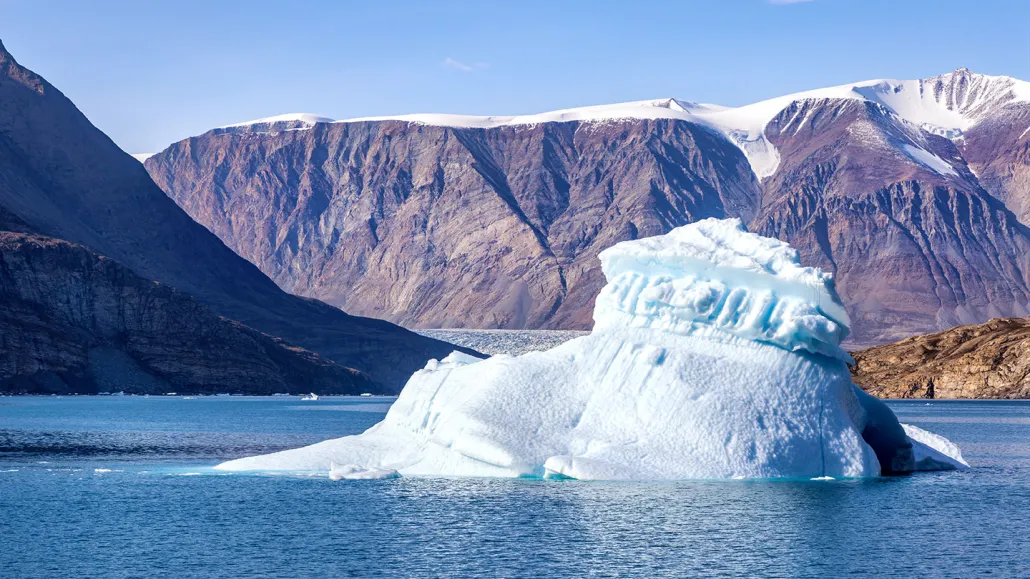
What caused the nine‑day seismic signal in 2023?
A 25.5 million cubic meter rockslide detached from steep slopes above Dickson Fjord, Northeast Greenland, at 12:35 UTC on 16 September 2023. The rock and ice mass accelerated downslope, impacted a small glacier and the fjord, and displaced enough water to create a megatsunami up to about 200 meters high. The fjord’s confined geometry reflected the wave repeatedly, sustaining a long‑lived seiche whose low‑frequency oscillations radiated through the solid Earth as very long period (VLP) seismic waves. Global seismic networks initially flagged the signal as unusual earthquake activity, but analyses converged on a landslide‑tsunami origin in this specific fjord (Science; The Seismic Record; Wikipedia summary).
Key facts: 25.5 million m3 rockslide into Dickson Fjord on 16 Sep 2023, initial wave up to ~200 m, fjord seiche persisted and produced a distinctive VLP seismic tone detectable worldwide for roughly nine days (Svennevig et al., 2024; Carrillo‑Ponce et al., 2024).
How did the landslide make a 650‑foot tsunami?
When a large mass enters a confined body of water at high speed, it displaces water and generates a wave whose height depends on slide volume, velocity, entry angle, and basin shape. Reconstructions indicate the Greenland slide reached peak speeds of tens of meters per second and impacted both ice and water, maximizing displacement. The narrow, steep‑walled fjord amplified the initial wave and subsequent reflections, with significant runup reported far down‑fjord (Science).
Why did the fjord keep “ringing” for more than a week?
A seiche is a standing wave established in an enclosed or partially enclosed basin when water sloshes between boundaries at one of the basin’s natural resonant frequencies. In Dickson Fjord, the tsunami excited a dominant resonant mode that persisted due to the fjord’s length, depth, and low energy losses on each reflection. As the water column oscillated, it exerted periodic loads on the fjord floor and walls, transferring energy into the crust as VLP seismic waves that travel efficiently and were recorded by stations around the world (The Seismic Record).
The fjord acted like a natural resonator, sustaining a near‑single‑frequency slosh that coupled water motion to ground motion and produced an unusually clean, long‑lasting seismic tone.
What triggered the Greenland landslide?
Analyses point to a combination of geological weakness and cryospheric change. Retreating and thinning glaciers can debuttress surrounding slopes, while permafrost thaw reduces rock mass strength. Northeast Greenland has warmed rapidly in recent decades, and researchers note climate‑linked destabilization likely set the stage for failure, though the immediate trigger was the mechanical instability of the slope itself (overview; peer‑reviewed analysis).
How did scientists identify and confirm the source?
- Global detection: Seismometers worldwide recorded an unusual, stable‑frequency VLP signal beginning on 16 September 2023.
- Signal characterization: Teams determined the frequency content and ruled out typical earthquake sources, pointing to hydrodynamic loading from a seiche.
- Backtracking: Timing and polarization of the waves were used to localize the source region to Northeast Greenland.
- Satellite evidence: Post‑event satellite imagery showed fresh scarps and debris consistent with a large rockslide into Dickson Fjord.
- Modeling: Numerical models reproduced the landslide dynamics, the tsunami, and the fjord’s resonant oscillations, matching the observed seismic signal duration and frequency (Science; The Seismic Record; EGU abstract).
For a clear, nontechnical explanation by a member of the research community, see this 10‑minute overview on YouTube (video).
How rare is this, and what are the implications?
Large rockslide‑generated tsunamis in fjords are known hazards in high‑relief, glaciated regions, but a week‑long, globally detectable VLP signal from a single seiche is unprecedented in the instrumental record. The event underscores three points: fjord geometries can sustain long‑lived hydrodynamic oscillations, these oscillations can couple efficiently to the solid Earth, and remote seismology can reveal hazardous events even in uninhabited areas. Greenland and similar regions should expect continued slope instability as glaciers retreat and permafrost degrades, making monitoring and early‑warning systems increasingly important.