
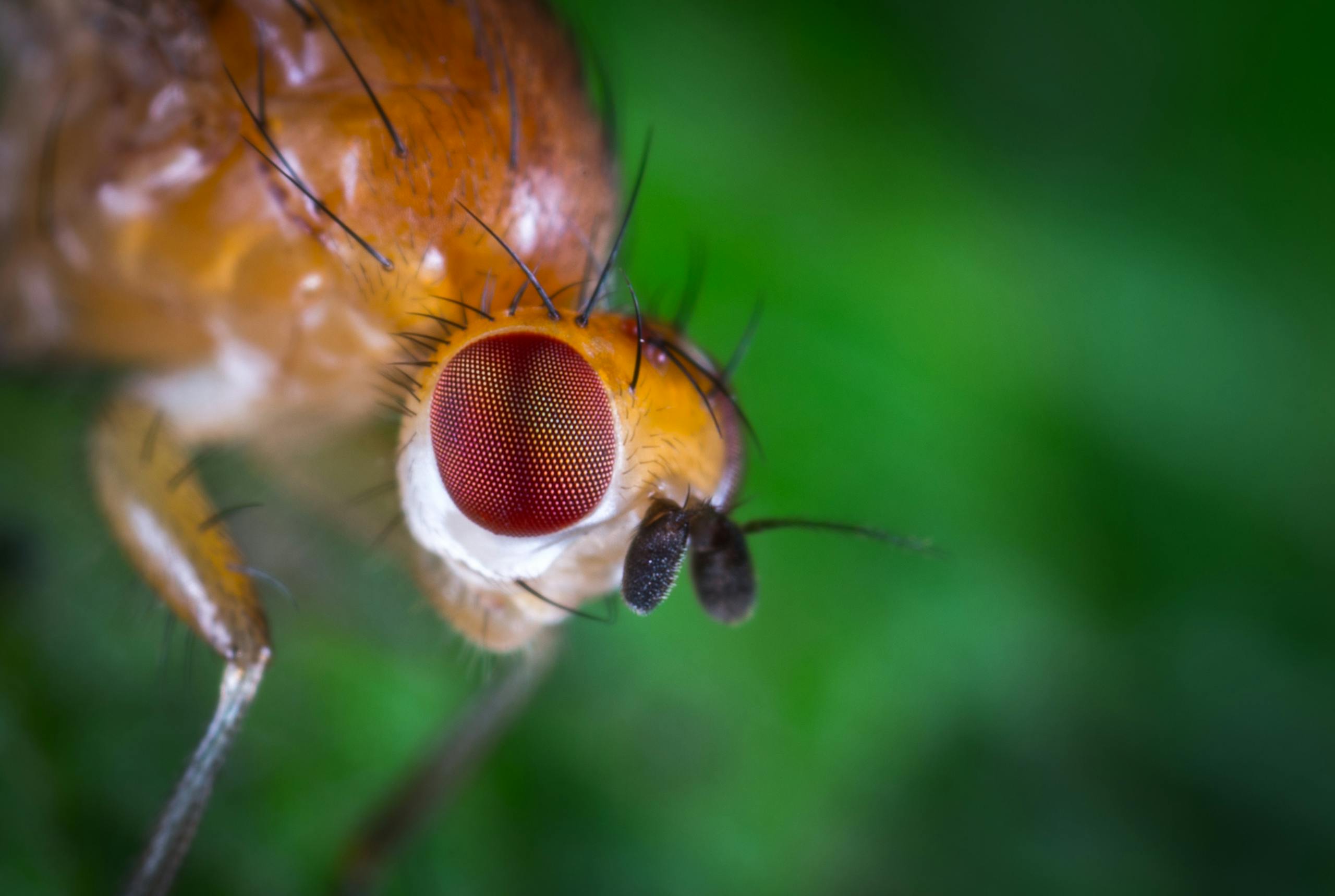
Hox genes are a conserved family of transcription factors that assign positional identity along an animal’s head to tail axis. They work by switching sets of target genes on or off in precise regions of the embryo, a pattern that often mirrors their order in the genome, which tells each segment what structures to build. When a Hox gene is activated in the wrong place or time, one body part can be transformed into another, such as fruit flies growing legs where antennae normally develop.
What are Hox genes?
Hox genes encode DNA binding proteins that share a 60 amino acid homeodomain, which recognizes specific sequences in gene regulatory regions. In animals, Hox genes sit in clusters in the genome, are highly conserved across species, and are central to how embryos lay out the body plan from head to tail. Their discovery emerged from classic Drosophila “homeotic” mutants that replaced one body part with another, work recognized by the 1995 Nobel Prize in Physiology or Medicine (Nobel Prize press release).
Hox genes are clustered, sequence related transcription factors that confer regional identity along the anterior posterior axis of animal embryos (Nature Education: Homeotic genes and body plans).
How do Hox genes work?
During early development, each Hox gene is expressed in a specific domain along the anterior posterior axis. Hox proteins bind enhancers and promoters of downstream genes, often with cofactors like PBC class proteins (Extradenticle/Pbx) and Meis family proteins (Homothorax/Meis), to control programs for segment identity, appendage type, and organ patterning. They integrate with signaling pathways such as retinoic acid, FGF, Wnt, and BMP to coordinate timing and position.
Colinearity means the order of Hox genes along the chromosome corresponds to the order of their expression domains along the body axis, and often to the timing of activation (Development: Vertebrate Hox gene function).
Hox genes also cross regulate one another, sharpening boundaries between regions and ensuring that each segment activates the correct structural program. Small changes in where or when a Hox gene is active can produce large changes in anatomy.
What happens when Hox genes are misexpressed?
Altering Hox gene activity produces homeotic transformations, in which one body region takes on the identity of another.
- Antennapedia (Antp) in flies: Ectopic expression of the Antp gene in the head can transform antenna forming tissue into leg forming tissue, leading to legs where antennae should be (Nature Education; FlyBase: Antp).
- Ultrabithorax (Ubx) in flies: Loss of Ubx converts the hind flight appendages (halteres) into an extra pair of wings, producing four winged flies (Nobel Prize background).
- Hoxa2 in mice: Disruption of Hoxa2 causes second pharyngeal arch derivatives to develop like first arch elements, altering jaw and middle ear structures (Development review).
Homeotic transformations demonstrate that Hox genes act as positional identity switches, instructing cells what kind of structure to build in a given location.
Do humans have Hox genes?
Yes. Vertebrates have four Hox clusters, HOXA, HOXB, HOXC, and HOXD, on different chromosomes, a result of ancient gene and genome duplications. These clusters pattern the axial skeleton, limbs, and many organs. Mutations in human HOX genes cause specific congenital conditions, for example:
- HOXA13 variants cause hand foot genital syndrome, affecting limb and urogenital development (MedlinePlus Genetics: HOXA13).
- HOXD13 variants cause synpolydactyly, characterized by extra and partially fused digits (MedlinePlus Genetics: HOXD13).
Why are Hox genes important for evolution and research?
Because Hox genes control regional identity, tweaks in their expression patterns or targets are a powerful way to evolve new body forms. Comparative studies link shifts in Hox boundaries to changes in vertebral counts in snakes, to limb and fin diversification, and to the wide variety of arthropod appendages across segments (Nature Education).
In the lab, Hox genes are tools for dissecting gene regulatory networks that build tissues, and for modeling disease. Misexpression experiments in model organisms like Drosophila or mice, performed under animal research oversight, reveal how identity programs are wired and how they fail.
Is manipulating Hox genes ethical or safe?
Hox gene manipulation is a standard research method in model organisms and is governed by institutional and national animal care regulations, such as oversight by Institutional Animal Care and Use Committees in the United States (NIH OLAW). It is not a clinical procedure for humans. Human genome editing, whether germline or somatic, is subject to strict ethical and legal frameworks, with international bodies calling for cautious governance and clear limits (WHO governance on human genome editing).
In short, transforming flies to grow legs on their heads is a controlled lab demonstration of how Hox identity works, not a pathway to redesigning human anatomy.