
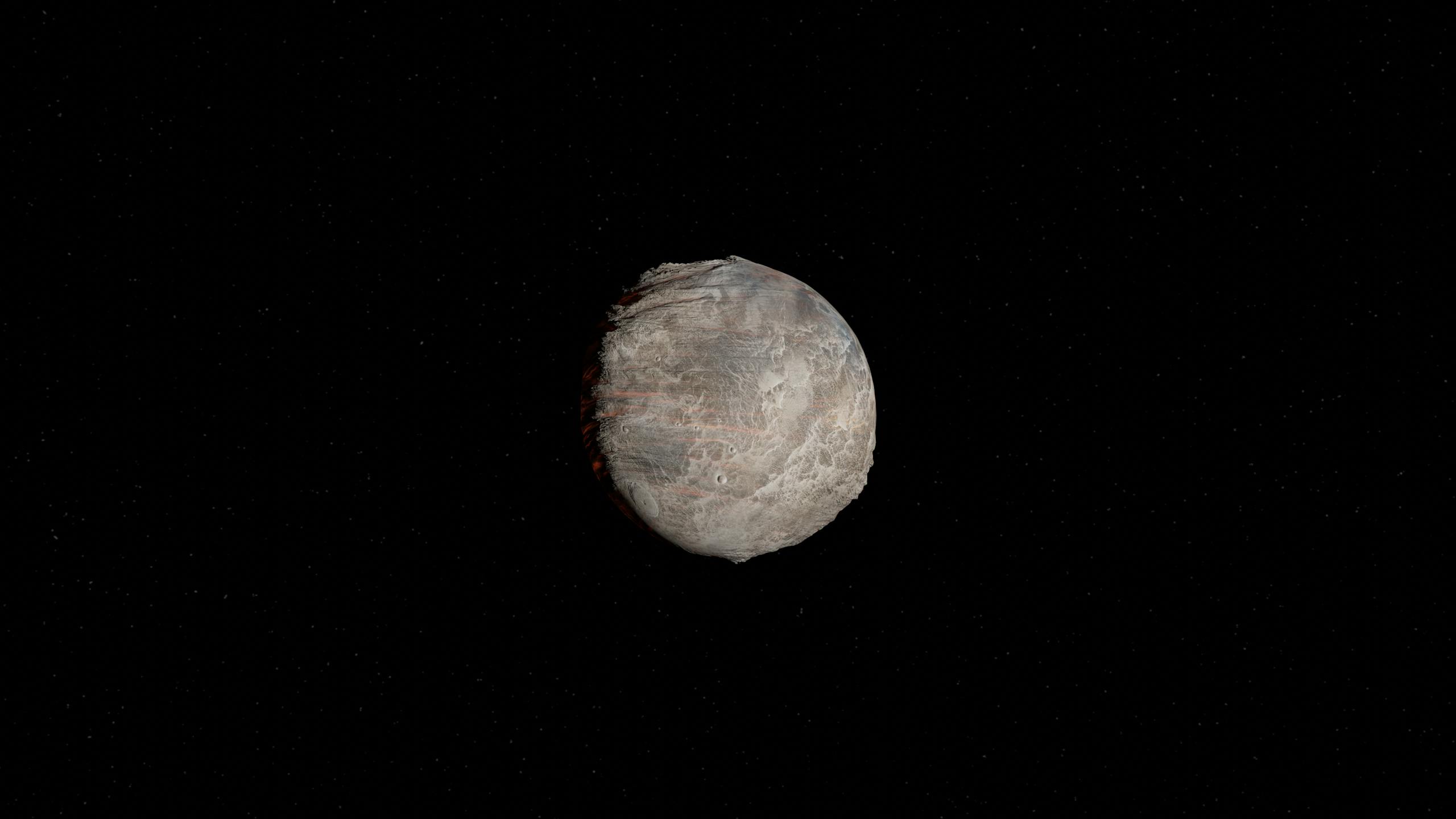
Fomalhaut b is now considered not to be a real exoplanet. Follow-up Hubble observations showed the object fading and expanding over time, behavior that matches an expanding dust cloud from a recent collision between two icy bodies in the Fomalhaut debris disk rather than a solid, planet-sized body. NASA has summarized the reversal, which updated the 2008 claim of the first visible-light exoplanet image around the nearby star Fomalhaut.
What is Fomalhaut b?
In 2008, astronomers announced a point of light near the bright star Fomalhaut, 25 light-years away, as a planetary candidate dubbed Fomalhaut b. It was hailed as the first exoplanet directly seen in visible light by the Hubble Space Telescope, reported by NASA at the time (NASA Hubble, 2008).
Fomalhaut is encircled by a broad, cold debris disk, a ring of dust and icy bodies that resembles a scaled-up version of our Kuiper Belt. The sharp inner edge of this ring had suggested gravitational sculpting by a planet, making the system a prime target for direct imaging.
In 2008, Hubble recorded a visible-light point source just inside Fomalhaut’s dust ring and its motion appeared consistent with an object bound to the star.
How did scientists decide it was not a planet?
Over the next decade, teams re-observed the source with Hubble and looked for heat glow at infrared wavelengths using other observatories. Several red flags emerged:
- It faded and spread out: Later Hubble images showed the source getting dimmer and more extended, consistent with an expanding, dispersing dust cloud, not a compact planet.
- No infrared detection: A young giant planet should emit detectable infrared radiation from its warm atmosphere. Observations did not find a matching thermal signal.
- Motion inconsistencies: The source’s position changes were difficult to reconcile with a stable, Keplerian orbit of a massive planet embedded in the disk.
A NASA analysis and explainer video describe the scenario in which the “planet” was actually a transient dust cloud from a high-speed collision of two icy planetesimals, seen in reflected starlight and then dissipating over years (NASA Goddard video).
Hubble time-series imaging is the key: a true planet remains compact and persists, while a collision-born dust cloud fades and grows as particles spread along their orbit.
What likely happened in the Fomalhaut system?
The leading explanation is a recent giant impact between two large, icy bodies within the debris ring. The smash-up created a vast cloud of fine dust that reflected starlight strongly when first observed, then thinned and sheared out along the orbit. Modeling suggests these bright, catastrophic collisions in Fomalhaut’s outer belt are rare, occurring roughly on timescales of hundreds of thousands of years, which explains why catching one with Hubble is unusual (NASA Goddard video).
This interpretation also fits the broader picture of Fomalhaut as an active debris system with abundant small bodies that frequently grind down in smaller collisions, occasionally producing spectacular, short-lived dust plumes.
Does this undermine direct imaging of exoplanets?
No. Fomalhaut b is a cautionary tale about false positives in a complex, dusty environment, not an indictment of direct imaging as a whole. Several exoplanets have been robustly directly imaged, such as the four giant planets orbiting HR 8799 and Beta Pictoris b, with consistent detections over many years and spectra confirming planetary atmospheres. A curated list is maintained on Wikipedia with citations to the primary literature (List of directly imaged exoplanets).
More broadly, most of the thousands of known exoplanets are discovered by transits and radial velocity measurements, methods that do not rely on images of the planet’s light and are unaffected by the Fomalhaut case. Cross-checking signals across multiple wavelengths and over time is now standard practice to validate candidates and avoid dust-cloud lookalikes.
Why the Fomalhaut b reversal matters
The retraction sharpened best practices for exoplanet imaging: combine visible and infrared data, obtain multi-epoch observations to look for fading or expansion, and model dust physics in debris disks to anticipate transient features. It also highlights the scientific value of “non-detections,” which can reveal alternative phenomena like expanding collision plumes and improve our understanding of how planetary systems grind and evolve.
Fomalhaut remains a top target. Its intricate belts and frequent small collisions make it a nearby laboratory for studying the messy middle stages of planetary system evolution.