
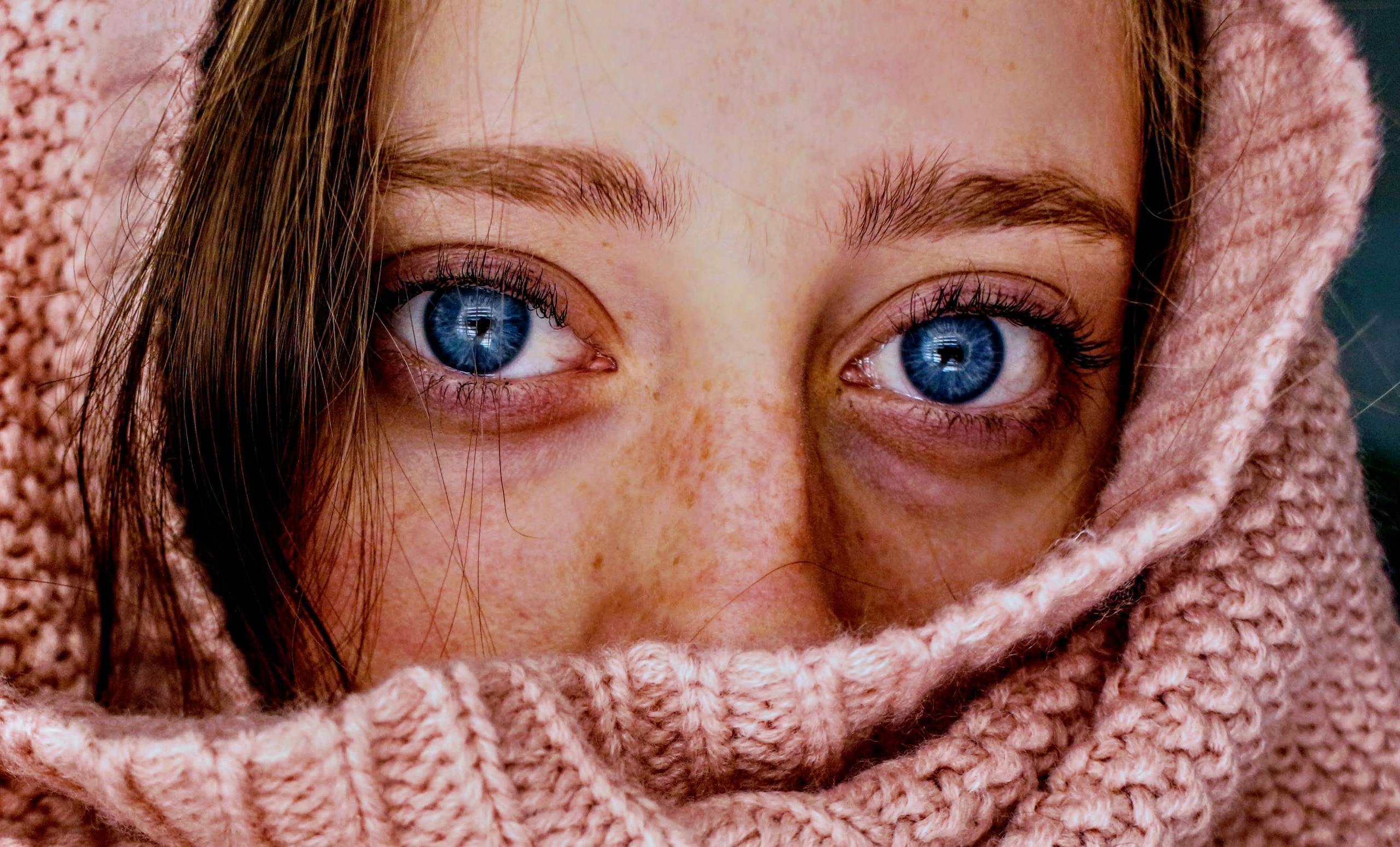
Yes. People with blue eyes are, on average, more sensitive to bright light because they have less melanin pigment in the iris, which lets more light and glare enter the eye. Light sensitivity can also be heightened if the back of the eye has less pigment, so some brown-eyed people experience it too. Sensitivity varies by individual and can also be caused by medical conditions.
What is photophobia?
Photophobia is the medical term for light sensitivity, a sensation of discomfort or pain in bright light. It is a symptom, not a disease, and ranges from mild squinting in sunlight to significant pain with indoor lighting.
Photophobia can be triggered by intense sunlight, glare, fluorescent or LED lighting, or an underlying eye or neurologic condition (American Academy of Ophthalmology).
Why are blue eyes more sensitive to light?
Eye color is determined by the amount and distribution of melanin in the iris. Brown eyes have more melanin, which absorbs and filters light. Blue, gray, and green eyes have less melanin, so the iris blocks less light and allows more stray light to reach the retina. That increases glare and discomfort in bright environments.
Pigment at the back of the eye matters too. The retinal pigment epithelium and choroid contain melanin that helps absorb internal reflections. People with less pigment there can be sensitive regardless of iris color, and conditions like albinism make this extreme (GeneReviews: Oculocutaneous Albinism).
Less iris melanin means less natural light filtering. Less pigment behind the retina means more internal scatter. Either can increase sensitivity to bright light.
In short, lighter irises tend to reduce natural glare protection, which is why blue-eyed people more often report discomfort in sun, snow, or reflective settings. But eye color is only one factor, and there is wide overlap between individuals.
Do blue eyes see better at night?
Not in any clinically meaningful way. Night vision depends mostly on rod photoreceptors, pupil size, and neural adaptation. Iris color has little effect under low light because pupils dilate and overall sensitivity is governed by retinal physiology. There is no strong evidence that blue eyes confer superior night vision compared with brown eyes. Claims of large night-vision advantages are considered a myth by eye health organizations (AAO).
Who else can be sensitive to light?
Light sensitivity is common and can affect anyone, including people with dark eyes. Contributing causes include:
- Migraine and post-concussion states
- Dry eye, corneal abrasions, or infections
- Uveitis and other inflammatory eye diseases
- Photokeratitis from intense UV exposure, such as on snow or water
- Certain medications that dilate the pupils or increase photosensitivity
If light sensitivity is new, severe, or associated with eye pain, redness, or vision changes, seek prompt evaluation by an eye care professional (Cleveland Clinic).
What about green, gray, or hazel eyes?
These colors fall between blue and brown in melanin content. As a rough guide, green and gray eyes typically have less melanin than brown but often more than very light blue, so sensitivity may be intermediate. Hazel eyes vary widely. Individual differences in retinal pigment and other factors often matter more than the iris color label itself (AAO: Eye Color and Melanin).
How can you reduce light sensitivity?
- Wear quality sunglasses that block 99 to 100 percent of UVA and UVB. Polarized lenses help cut glare off water, snow, and pavement (AAO: Sunglasses).
- Add a brimmed hat outdoors to reduce overhead glare.
- Consider photochromic or tinted lenses for everyday comfort. People with migraine may benefit from FL-41 or similar therapeutic tints (American Migraine Foundation).
- Reduce indoor glare with softer lighting, task lamps instead of overheads, and anti-reflective coatings on lenses.
- Give your eyes time to adapt when moving from dark to bright environments, such as leaving a theater at midday.
- Treat underlying conditions like dry eye or inflammation as advised by your clinician.
Look for sunglasses labeled “UV 400” or “100% UV protection.” This indicates full blocking of UVA and UVB, which protects eye health and reduces discomfort.