
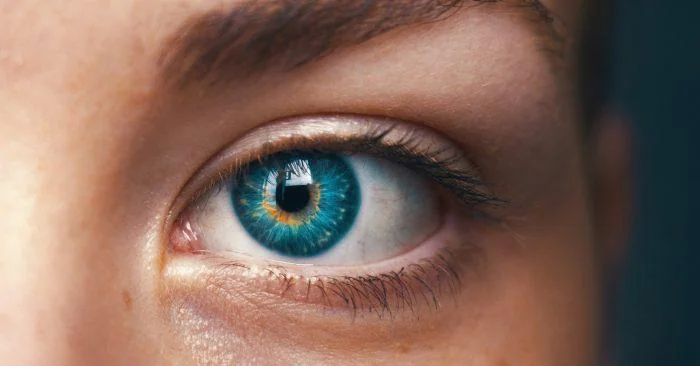
Close your eyes and picture a desk lamp flicking on in a dark room. For most people, the pupils pinch, as if a real bulb just flared to life. For others, nothing happens. No reflex, no ghostly light, no inner stage. That second group has a name now, and increasingly, a measurable signature: aphantasia, the near-total absence of visual imagery.
The internet loves a revelation, and few realizations are as disorienting as discovering that not everyone’s mind’s eye works the same way. A viral thread about a new “pupil test” for aphantasia struck that nerve again. The test’s logic is elegant: if imagining brightness nudges the same brain circuits as seeing brightness, then the eye’s involuntary light reflex should follow suit. When it doesn’t, that’s a clue that the visual imagery machinery is running quiet.
Your pupils constrict for imagined brightness and dilate for imagined darkness. In aphantasia, that shift is markedly reduced or absent.
That core effect has been demonstrated for a decade. In 2014, researchers showed the eye pupil adjusts to imaginary light—the stronger the imagery, the stronger the reflex (Psychological Science). More recently, teams studying aphantasia used the same pupillometry to reveal a blunt difference: people who report no mental images show no measurable pupil response when asked to visualize bright or dark shapes, whereas typical imagers do. The work adds to objective evidence begun with the binocular rivalry paradigm, which showed that self-identified aphantasics fail to bias visual perception using imagery, unlike most people (PubMed).
The appeal of a physiological readout is obvious. The first modern accounts of aphantasia, popularized in 2015, relied on self-report scales like the Vividness of Visual Imagery Questionnaire (VVIQ). That sparked a wave of “Wait, people can actually see pictures in their head?” testimonies, but it also left critics asking whether aphantasia reflects a metacognitive blind spot rather than a sensory one. Lab measures—binocular rivalry, skin conductance during imagined fear, and now the pupillary light response—push back on that skepticism by tapping the body’s automatic systems. You can overthink a questionnaire; you can’t fake your pupils.
What the pupil test shows—and what it doesn’t
It’s tempting to call this a diagnostic test. Caution is warranted. In one typical pupillometry study, roughly 60 participants were divided into a control group and a self-identified aphantasia group, then asked to imagine bright or dark shapes while their pupil size was recorded. The control group’s pupils constricted for imagined light and dilated for imagined dark. The aphantasia group’s pupils barely budged. That’s compelling, but it is not a medical diagnosis on its own.
Small samples, controlled labs, and careful instructions underpin these effects; they’re not parlor tricks for your phone camera.
Pupil size reflects more than light. Cognitive effort, attention, surprise and arousal all tug on it. The best experiments counter those confounds with matched control tasks, randomized trials, and within-subject comparisons. Done right, the pattern holds. Done casually—say, trying this between emails, sunlight streaming in—it’s easy to muddy the signal. The test is an elegant window into imagery strength, not a standalone certification of internal blindness.
There’s another nuance Reddit often flattens: aphantasia isn’t a binary club. Imagery vividness sits on a spectrum that runs from aphantasia through the statistical middle all the way to hyperphantasia, where mental images are movie-bright. That gradient shows up in self-report scales, in binocular rivalry priming, and in the size of the pupillary light response. Treating the condition as on/off risks misunderstanding both experience and science.
Why this matters beyond a neat party fact
Understanding who can’t—or simply doesn’t—visualize changes how we think about learning, memory and mental health. A few examples:
- Education and design: If a student doesn’t “see” geometry or a client can’t picture a remodel, that’s not a failure of imagination. It suggests using different tools: physical models, sketches, code, or step-by-step constraints instead of “visualize it.”
- Therapy and trauma: Imagery-heavy techniques for PTSD and anxiety assume a robust mind’s eye. Aphantasia may blunt both intrusive imagery and some imagery-based therapies, calling for adapted protocols.
- Creativity: Artists with aphantasia exist—and thrive—by leveraging concepts, rules and external references instead of internal pictures. Creativity isn’t a monopoly of the visually vivid.
Historically, the phenomenon has been hiding in plain sight. Francis Galton wrote about individual differences in mental imagery in the 19th century. The modern label, aphantasia, coalesced only recently through clinical and popular work from neurologist Adam Zeman and colleagues in Exeter’s Eye’s Mind project (University of Exeter) and through reporting that vaulted the idea into public awareness (New York Times).
Prevalence estimates land around a few percent of the population. That’s enough to fill stadiums, but not enough to explain why every aphantasia thread seems packed with self-diagnoses. Sampling bias is the culprit. People without vivid imagery, often puzzled by figurative language like “picture this,” are more likely to click, comment, and compare notes than those for whom the concept feels unremarkable.
So where does the pupil test fit? It’s part of a larger shift from introspection to instrumentation in the science of imagery. Alongside pupillometry, binocular rivalry has been especially persuasive. When you show one eye red stripes and the other green stripes, perception flips between them. If you ask someone to imagine red beforehand, most people bias the next flip toward red. In a landmark study, aphantasics didn’t (PubMed). That result, together with absent pupil responses to imagined light, bolsters the case that aphantasia is about sensory imagery, not just awareness of imagery.
Reasonable questions remain. Some people with aphantasia report vivid dreams, suggesting that REM-related imagery and waking imagery can dissociate. Others describe “conceptual visuals” that feel spatial and detailed without being picture-like. Many excel at tasks that appear to demand visualization—architecture, software, surgery—by building robust workarounds: externalizing ideas on paper, using constraints and checklists, or thinking in symbols and words.
If anything, the new physiology invites better, more targeted experiments. Do aphantasics show typical pupil responses to imagined sounds or to multisensory scenes? How does imagery strength relate to attention, working memory, or emotional reactivity? And for clinicians, can pupillometry track progress when therapies aim to strengthen or replace imagery? These aren’t abstract curiosities; they’re the next set of practical questions.
The promise here isn’t a label. It’s a language for individual minds—a way to match tools to cognition rather than forcing cognition to fit the tools.
It’s easy to turn aphantasia into a deficit story. It shouldn’t be. Aphantasia and hyperphantasia are variations in how minds build internal models. For some, those models are cinematic. For others, they’re schematic or linguistic. As long as we mistake “visualize” for “imagine,” we’ll misread a lot of human potential. The pupil test is a clever clue about inner light. The bigger illumination is social: not everyone’s inner room is lit the same way, and that’s not a flaw to fix, it’s a fact to work with.