
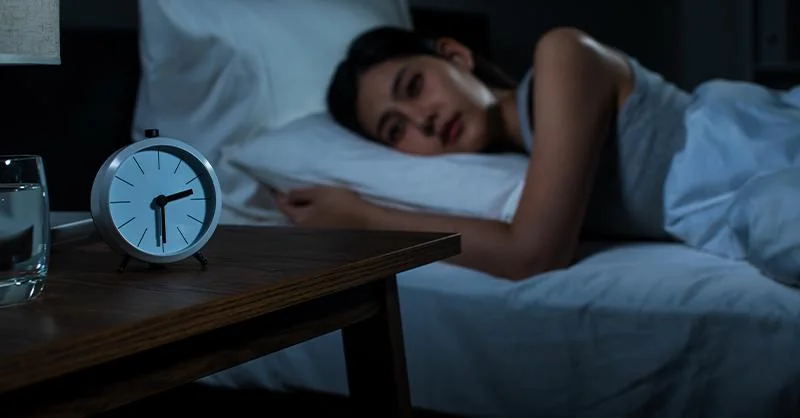
The map of American longevity may be hiding in plain sight on your nightstand. In the county where you live, the average number of hours people sleep helps predict how long your neighbors will live. That is the arresting headline from new work out of Oregon Health & Science University, which reports that communities with more insufficient sleep tend to have shorter life expectancies.
In a nationwide analysis published in SLEEP Advances, the OHSU team linked county-level life expectancy to self-reported sleep from Centers for Disease Control and Prevention surveys between 2019 and 2025. Their press release puts it bluntly:
As a behavioral driver for life expectancy, sleep stood out more than diet, more than exercise, more than loneliness — indeed, more than any other factor except smoking.
Lead author Andrew McHill says the association surprised even sleep researchers. The model defined sufficient sleep as at least seven hours per night, in line with recommendations from the American Academy of Sleep Medicine and the Sleep Research Society. According to the paper’s description and comments from the authors, the analysis used mixed-effects modeling to adjust for a thicket of confounders, including smoking and physical inactivity. At a population level, the signal was consistent across most states and study years.
It is an attention-grabbing finding. It is also a finding that begs for context.
What this study does — and does not — prove
First, the study is ecological. It links averages in a place to outcomes in that place. That is valuable for public health and policy, where decisions about school start times or shift scheduling are made for entire communities. It is not the same as proving that your personal habit of getting six hours rather than seven will shorten your life. County-level patterns are not prescriptions for you.
Second, sleep science is full of nuance that press releases often flatten. A large body of cohort research has found a non-linear, often U-shaped, relationship between sleep duration and mortality. In other words, both short and long reported sleep are associated with higher mortality risk relative to about seven hours. A 2010 meta-analysis in Sleep found exactly that pattern in millions of person-years of data (Cappuccio et al.), as did a 2016 meta-analysis in Scientific Reports (Shen et al.).
Across dozens of cohort studies, people reporting roughly seven hours a night have the lowest mortality risk, with risk rising on either side of that point.
Why the U-shape? One reason is reverse causation. Chronic illness can make people sleep longer and feel worse, inflating the apparent risk among long sleepers. On the short side, insomnia, sleep apnea and shift work plausibly drive health risks that show up as shorter sleep and shorter lives. Self-report also complicates things. People misestimate. In a study that compared diaries and devices, the correlation between self-reported and measured sleep was modest, and people sleeping five hours tended to overreport by more than an hour (Lauderdale et al., 2008).
Finally, beware sweeping claims that society is spiraling into a sleep crisis. Time-use studies in multiple countries have not found a dramatic collapse in average sleep time since the 1970s. One cross-national analysis of 328,000 people found short sleep decreased in the United States over several decades (Bin, Marshall and Glozier, 2013). In the United Kingdom, a detailed diary study suggests people now sleep about 43 minutes more than they did in the 1970s (Lamote de Grignon Pérez et al., 2019). None of this makes sleep unimportant. It does make simplistic narratives suspect.
The real-world rub: sleep is health, but sleep is also time
If you read through the comment thread where this study first went viral, a theme emerges. People want to sleep. They also want a life. New parents talk about months of broken nights. Shift workers describe rotating schedules that keep their body clocks off-kilter. Office workers who commute 90 minutes each way say eight hours of sleep squeezes the last daylight from their week. A few even attempt a bleak calculus: if I sleep less, I get more waking years while I am young.
Sleep is the rare health behavior that competes with everything else you value. Work, caregiving, socializing and Netflix all fight for the same hours.
That is why the most promising solutions are not just about individual willpower. They are structural. Later school start times for adolescents increase sleep and improve grades and safety. Predictable scheduling laws reduce volatile swings in work hours that wreck sleep. Commuting less by supporting remote or hybrid work restores time to both family and rest. Aligning shift schedules with human biology reduces injuries and errors. Public insurance coverage of proven insomnia treatments lowers barriers to care.
When governments and employers treat sleep as basic infrastructure, communities reap the gains in productivity, safety and yes, longevity. When they do not, people make rational tradeoffs that look irrational only under a microscope.
- Education policy: A later first bell aligns with adolescent biology and extends sleep; the American Academy of Pediatrics has urged this for years.
- Workplace design: Stabilize schedules, reduce overnight rotations, and give genuine rest opportunities between shifts.
- Healthcare access: Expand coverage and availability for cognitive behavioral therapy for insomnia, the first-line treatment endorsed by the American College of Physicians.
- Public health basics: Screen for symptoms of obstructive sleep apnea in primary care, especially in patients with loud snoring, hypertension or daytime sleepiness, and ensure pathways to testing and treatment.
So what should you do on Monday morning?
Start by reframing sleep as a pillar, not a perk. The case for seven to nine hours remains strong for most adults, and the OHSU study adds weight at a community scale. But there is no virtue in forcing nine hours if your body consistently wakes refreshed at seven. There is also no virtue in ignoring treatable sleep disorders or soldiering through impossible schedules.
A few evidence-backed steps improve the odds without turning bedtime into a second job: keep a consistent rise time all week; get morning daylight to anchor your internal clock; keep late caffeine and alcohol in check; and reserve the last hour before bed for quiet rather than glowing rectangles. If you have persistent difficulty sleeping, CBT-I has the best data and can be delivered effectively via digital programs as well as therapists. If you snore loudly, wake choking, or feel exhausted despite long nights, ask your clinician about sleep apnea evaluation. None of this is moral advice. It is harm reduction for a 24-hour society.
One last correction to the fatalism that often creeps into sleep discourse. A bad stretch is not a prophecy. Sleep is not a bank account you can never balance again. Physiology is forgiving. The brain learns. Habits, and policies, change.
Which returns us to the original finding. If the place you live sleeps a little more, people there seem to live a little longer. That suggests a simple, radical public idea: treat the nightly interval when citizens are not producing or consuming as civic space worth defending. Cities plan for traffic. They can plan for quiet. Employers regiment schedules down to the minute. They can plan for recovery. We already know how to build healthier streets and healthier cafeterias. Building healthier nights is the next obvious step.