In a quiet room a phone timer glows, a soft tone marks five seconds in and five seconds out. On a chest strap monitor the jagged trace of heartbeats begins to roll into a smooth wave, each inhale lifting the rate, each exhale lowering it. The shift looks small. It feels bigger than that.
The practice has several names, but most people now know it as coherent or resonance breathing. Breathe about six times a minute, usually through the nose, for 10 to 20 minutes, and the heart and lungs begin to move in synchrony. Practitioners talk about steadier moods and better sleep. Clinicians see a technique with decades of research behind it that can raise heart rate variability, the beat to beat flexibility that reflects how well the nervous system adapts to stress.
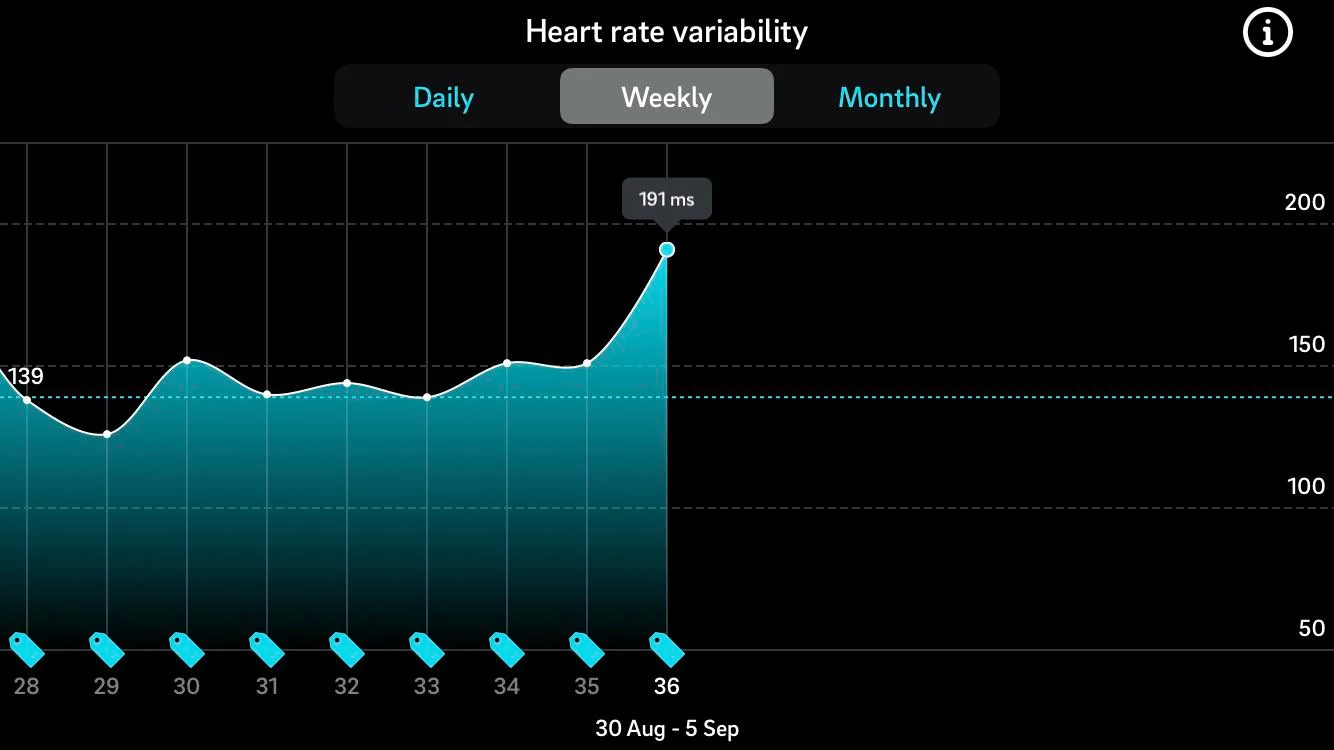
Heart rate variability, or HRV, is not a fitness badge so much as a barometer. It measures the tiny differences in time between heartbeats, and higher values tend to signal a nervous system with options. It goes up and down across a day, often rising at night during deep rest. Lower values can accompany illness, sleep debt or hard training. No single number defines health, but the pattern matters. What breath practice offers is a way to nudge that pattern in real time.
The science behind a very slow breath
The idea of a resonant breath grew from work by psychologist Paul Lehrer and colleagues and from physiologists Evgeny and Bronya Vaschillo, who studied how breathing interacts with the baroreflex, the body’s pressure control loop. At a certain breathing frequency, roughly 0.1 hertz or about six breaths per minute, the oscillations of breathing, blood pressure and heart rate line up. When they align, the swings in heart rate become larger and more regular, and vagus nerve activity rises. Clinician researchers such as Richard Gevirtz helped turn that mechanism into HRV biofeedback, a protocol used in behavioral medicine clinics for anxiety, functional gastrointestinal disorders, and chronic pain.
In plain terms, resonance is a timing trick. Inhale, the heart rate tends to rise. Exhale, it falls. If you time those cycles to the baroreflex rhythm, the two systems amplify each other. The result on a live monitor is a sinus like wave with a larger peak to trough swing. Over repeated sessions, studies have reported not just short term HRV jumps but also changes that linger, like improved baroreflex sensitivity and lower resting anxiety levels.
The exact sweet spot is individual. Some people hit peak amplitude at five seconds in and five seconds out. Others do better with a slightly longer exhale, for example four seconds in and six seconds out. Clinicians often assess a person’s resonance frequency with a sensor and software, but a simple pacer gets most people close enough to feel the effect.
How to try it
You do not need a lab. You need a clock and a quiet corner. Start small, learn the feel, then expand.
- Posture and pace: Sit or recline with the head supported, jaw unclenched, shoulders down. Breathe through the nose if you can. Inhale for five seconds, exhale for five seconds. Let the belly move first, then the chest. Keep the breath smooth at the turnarounds.
- Duration: Begin with 8 to 10 minutes once a day. Work toward 20 minutes, twice daily, which is a common clinical dose in HRV biofeedback protocols.
- Variations: If you feel tense on equal breaths, try a longer exhale, such as four seconds in and six out. Avoid breath holds at first. The goal is a relaxed, even rhythm.
- Attention: You can focus on the sensation of air and movement, or use a simple visual pacer. If lightheaded, slow the pace, shorten the breath, or stop and try again later.
Apps that provide a silent visual metronome make this easier. The Breathing App offers adjustable pacing on iOS. HRV biofeedback apps like Elite HRV or HRV4Biofeedback pair with chest straps or camera sensors so you can watch the wave appear as you breathe. Many coaches favor ECG straps, such as the Polar H10, because electrical signals make the timing between beats clearer than optical wrist or finger sensors.
What to expect, and what not to
When you breathe at resonance, some responses arrive quickly. The heart rate swings get larger within minutes. The mind often follows with a sense of settling, though not always on day one. Over weeks, people commonly report fewer stress spikes and easier recovery after hard work. That does not mean every reading will soar. HRV is affected by sleep, illness, hydration, caffeine, temperature, menstrual phase, altitude and more. The number will still wander, even with steady practice.
Confusion often starts with devices. HRV is not a single metric, and different tools capture different slices of it. Wearables tend to estimate HRV at night from optical signals and report one summary value, often RMSSD or an algorithmically smoothed version of it. HRV biofeedback tools emphasize the shape of the rhythm in the moment, sometimes labeled coherence, which is a measure of how regular the waveform becomes around the target frequency. A beautiful coherence score during a session can coexist with a modest nightly HRV average, and that is fine. They are not the same thing.
Another surprise is how personal the response can be. Some people relax on equal breaths, others find a longer exhale more calming. A small subset feels edgy when they slow down too much, especially early in practice or during high stress periods. For them, it helps to shorten the sessions, keep the pace a bit faster, or start with movement and return to the breath later. If you have a respiratory condition, cardiovascular disease, are pregnant, or have a history of panic symptoms, talk with a clinician familiar with breathing therapies before committing to long sessions.
Beyond calm: where the research points
HRV biofeedback has been tested for more than two decades. Peer reviewed studies have reported benefits for generalized anxiety, depression symptoms, asthma control, functional gut disorders, temporomandibular pain, migraine and blood pressure regulation, often as part of a broader treatment plan. Athletic programs use resonance breathing for recovery blocks between intense efforts and to sharpen focus before competition. Therapists weave it into trauma informed care to provide a bottom up way to regulate arousal. None of this makes the breath a cure all, and it should not replace medical advice, but the breadth of applications comes from the same basic mechanism. Train the reflexes that stabilize you, and more situations feel manageable.
Writers have helped bring that science to a wider audience. Stephen Elliott popularized coherent breathing protocols. James Nestor’s book Breath mapped how nasal breathing, slower cadence and oral posture shape health over a lifetime. The details vary, but the core thread runs through all of it. Slow it down, make it smooth, do it regularly, and let physiology do some of the work you are asking willpower to carry alone.
Building a simple practice that sticks
- Pair it with anchors: five minutes after you wake, five minutes before lunch, ten minutes before bed. Consistency beats heroic sessions.
- Stack it with habits you already keep, like a daily walk. Some find a gentle cadence during easy walking helps them tolerate longer sessions.
- Keep the environment boring. A metronome, a dim room, and a comfortable chair are usually enough.
- Track lightly if tracking motivates you, but resist chasing a single perfect number. Look for steadier trends over weeks.
The most telling feedback tends to come off the graph. Do you fall asleep faster. Do arguments end sooner. Does a hard interval feel a little more controllable, or a meeting leave fewer aftershocks. Those are the signs the system is learning.