
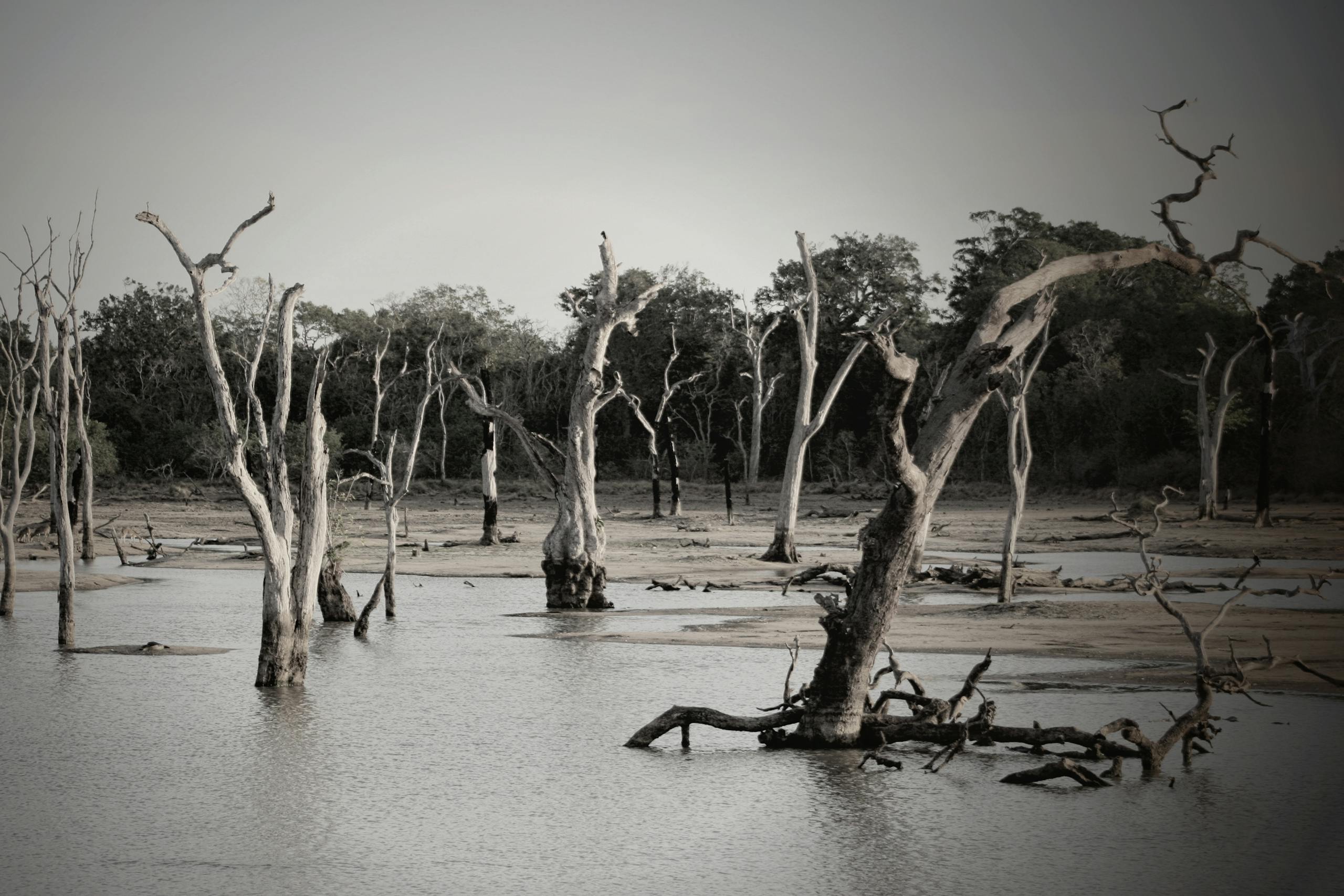
Thirty miles north of Istanbul, the Bosporus narrows to a mile-wide strait where salt water runs like a river between seas. On sonar, the Black Sea floor nearby shows what looks like an old shoreline, a ghostly terrace now in the dark. For some scientists, that drowned edge is a clue to one of humanity’s most enduring stories.
A deluge at the threshold of two seas
In the late 1990s, Columbia University geologists William Ryan and Walter Pitman advanced a bold hypothesis. As the last ice age waned and global seas rose, they argued, the Mediterranean overtopped the Bosporus around 5600 BCE and surged into a lower, mostly fresh Black Sea basin. In their reconstruction, the inflow was violent, the sea level jumped by as much as 80 meters, and tens of thousands of square kilometers of coastal plain vanished beneath brackish water within months to years. People living on those shores would have watched farmland, villages, and graveyards disappear.
Ryan and Pitman were not the first to connect geology with myth, but their proposal arrived with vivid numbers, new cores, and a simple question: if a flood reshaped the Black Sea, might memories of it have traveled into the ancient Near East, eventually entering scripture as the story of a righteous man, an ark, and a world renewed?
The idea captured imaginations far beyond geology. Marine expeditions mapped submerged terraces and sampled shells that seemed to tell a before-and-after tale, from freshwater species to marine ones. The oceanographer Robert Ballard led dives that reported a drowned shoreline and well-preserved shipwrecks in the anoxic depths, a reminder that this sea keeps what it takes. The scene was cinematic: a narrow gate opening, a roar of water, villages emptying as people scrambled to higher ground.
Then came the pushback. Other teams coring the seabed saw a gentler story, with the Black Sea already connected to the Mediterranean before 5600 BCE and the transition to salt water more gradual. Geologists including Ali Aksu and colleagues published work arguing against a sudden deluge. Radiocarbon corrections, shifting shorelines, and complex currents all muddy the picture. In short, even in the era of multibeam bathymetry and isotope labs, the Black Sea refuses to make the narrative easy.
The older flood on clay tablets
Set the Bosporus aside and walk east, into the libraries of clay tablets. The earliest detailed flood story we can read comes from Mesopotamia, not the Black Sea. A Sumerian tale of Ziusudra, likely from the early second millennium BCE, tells of a man warned of a divine plan to send a flood, who builds a boat and survives. The Akkadian Epic of Atrahasis, from about the seventeenth century BCE, preserves a fuller version. Centuries later, the flood episode in the Epic of Gilgamesh portrays Utnapishtim receiving precise instructions, coating a great boat with pitch, saving his family and the seed of all life, sending out birds to test for land, and grounding on a mountain.
Readers of Genesis will recognize the pattern. The Hebrew text is later, compiled from sources woven together with care and theological purpose, likely finalized in the first millennium BCE. Many scholars think Israelite scribes encountered Babylonian literature during the Exile and recast the flood motif for a monotheistic audience. The correspondences are specific: a divinely dictated ark, waterproofing with pitch, a cargo of humans and animals, birds as scouts, a mountain landfall, and a covenant after the waters fall.
This literary lineage does not require the Black Sea to have thundered into the story. It shows how ideas flow between cultures, how motifs are borrowed, translated, and transformed. The Mesopotamian rivers themselves flood. In a flat country hemmed by the Tigris and Euphrates, a bad year is a catastrophe and a great year can feel like the world ending. Myths are a way to narrate risk and order. They carry ethics and cosmology along with weather reports.
Floods everywhere, and what memory can hold
The Near East is not alone. Flood myths crowd the map because people settled on river plains and coastlines, places that feed, trade, and occasionally betray. At the end of the ice age, sea levels rose more than a hundred meters worldwide. Shorelines marched inland for millennia. Oral traditions are not seismographs, yet some seem to recall changes on that scale. The geographer Patrick Nunn and linguist Nicholas Reid have argued that Aboriginal Australian stories preserve memories of coastal inundation many thousands of years old. The details vary by region, but the core is the same: the sea once came where it had never been, and people moved.
In North America, geologists long ago recognized the scale of cataclysmic outburst floods in the Pacific Northwest. When ice dams failed on glacial Lake Missoula between roughly 15,000 and 13,000 years ago, walls of water raced across what is now eastern Washington, scouring channels, leaving giant ripples, and tumbling house-sized boulders like children’s toys. The Bonneville Flood, about 14,500 years ago, unleashed the overflow of paleolake Bonneville down the Snake River and across Idaho. Indigenous traditions from the region include stories of great waters that reshape the land. They are not technical reports, but they are not blind to geology either.
That does not mean every myth maps neatly onto one event, or that any single catastrophe explains the global spread of flood stories. It means floods are part of the human archive. They arrive suddenly or slowly, they mix fear with renewal, and they demand interpretation. A symbol like forty days functions as a marker of long duration in Hebrew. A mountain is a sanctuary, a place where the world steadies again.
What the Black Sea debate really asks
The argument over a Black Sea deluge endures because it sits at a fascinating intersection. On one side is physical evidence that can, in principle, be measured: terraces, sediment layers, the species of tiny shells, the chemistry of water trapped in pores. On the other side is a set of stories, copied and recopied across centuries, carrying law and lament and hope. The temptation is to make one side prove the other. The wiser course is to let each clarify the possible.
If there was a sudden inflow through the Bosporus around 5600 BCE, people would have suffered and moved, and some of their descendants would have told a story about it. If the change was gradual, the pressure on coastal communities would still have been real, and stories would still have been told. Either way, when scribes set stylus to clay in Mesopotamia, they had a flood narrative close to hand that already had a rich literary life before Genesis.
The more important point may be what these stories do, not where they begin. Floods are moments when a world ends. The familiar turns on its side. Boats become houses, animals become passengers, and survival depends on building, planning, and listening for a warning. Afterward, there is a ritual of return: a bird that does not come back, a mountain, an offering, a promise to do better or a promise from the sky. The arc of the narrative is as practical as it is theological.
Water, memory, and a coastline that keeps moving
The Black Sea will go on yielding data, and specialists will keep arguing over dates and flow rates. The tablets from Mesopotamia will go on speaking, and translators will still debate a word here and a line there. The flood will remain a story that cultures tell to make sense of danger and to ask what a society owes the future.
Stand again at the Bosporus on a windy day and watch the blue water hurry by, the surface running north while heavier Mediterranean water slides south below. The strait carries a memory of difference held in a single channel. Something like that runs through the flood story too. It is fact braided with meaning, geology braided with law, the oldest human problem posed as a simple image: the water is rising, what will you carry, and who will you become when the shores are new.