
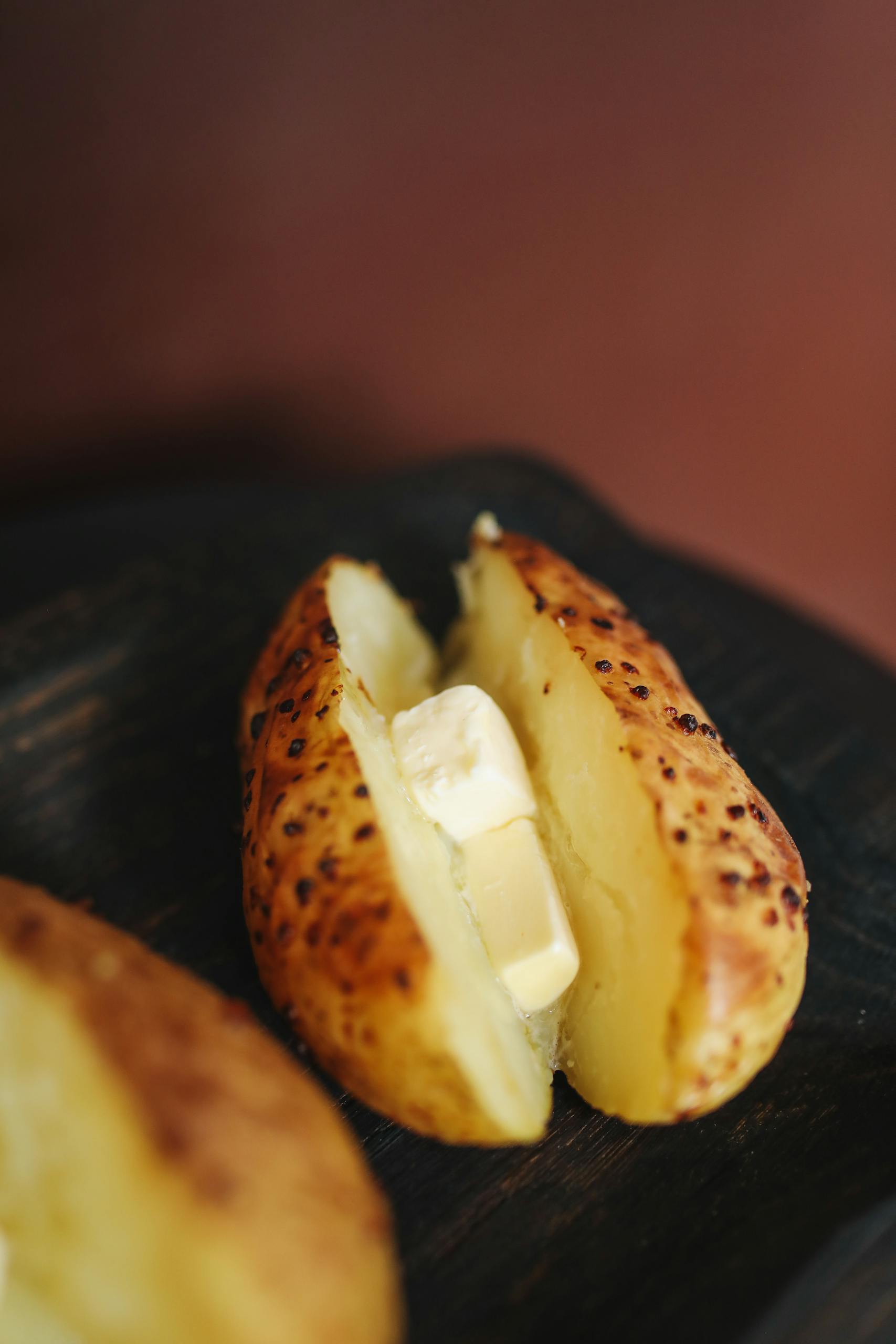
When the timer dings, the russet that knocked like a stone now yields to a fork as if it is full of air. The same vegetable, same shape, same earthy scent, yet it has crossed a line: from rigid to tender, from raw to ready. What changes inside a potato in that hour of heat is a small master class in plant biology and kitchen physics.
Starch wakes up, swells, and lets go
Potatoes are storage organs, built to hold energy for a plant to use later. Much of that energy is packed as starch granules tucked inside the cells. In a raw potato those granules are compact, semi-crystalline, and stubborn. They resist water, they resist your teeth, and they keep neighboring cells firm and well supported.
Heat changes their behavior. As the potato warms and moisture moves through its flesh, starch granules absorb water and swell. Around roughly 60 to 70 degrees Celsius (140 to 160 Fahrenheit), a process called gelatinization begins. The granules lose their crystalline order, grow, and some of their chains leak into the surrounding water. Inside the potato, that leaked starch turns the cell interiors from grainy to gel-like. Where you once had many tiny hard particles, you now have a soft continuous network that gives when pressed.
If you mash a baked potato, that released starch is the silky glue that binds the crumbs. If you bake it whole, the same transformation lets the interior feel fluffy, not gritty.
Cell walls surrender their grip
Starch is not the only structure keeping a raw potato firm. Plant cells are bound to each other by a glue-like middle layer rich in pectins. These are long carbohydrate chains that, in living tissue, help keep cells tightly stuck together. In cooking, pectins slowly loosen. Above about 80 degrees Celsius (176 Fahrenheit), the cross-links that hold that glue together begin to break, and parts of the pectin dissolve into the surrounding water.
As cell-to-cell adhesion weakens, the potato does not melt; instead, its texture changes in a way your tongue can recognize. Cells start to separate rather than tear. That separation is a hallmark of floury, mealy textures. A bite of a baked russet crumbles into soft granules because the connections between cells have relaxed and let go, even as the cells themselves are filled with gelatinized starch.
There is a timing dance here. Early in heating, natural enzymes in plant tissues can briefly firm things up by altering pectin chemistry. But as temperatures climb, those enzymes denature, and heat-driven breakdown takes over. The longer the potato stays hot, the more those cellular joints soften.
Steam inflates, then fractures the interior
Water begins to move as soon as the potato warms. In the oven, moisture migrates toward the center and toward the surface. Near boiling temperatures, some of that water vaporizes. Steam pushes outward, raising pressure in pockets between and within cells. That pressure encourages more cell walls to rupture or separate, further weakening the lattice that kept the raw potato rigid.
This interplay of gelatinized starch, loosened pectin, and steam pressure is why an oven-baked potato opens into a fluffy cloud once split, while a boiled potato often stays dense and moist. The oven creates a pressure vessel with a drying crust; boiling surrounds the potato with water, which limits steam build-up and keeps the surface from dehydrating. Both methods soften; they just steer the texture in different directions.
Why some potatoes fluff and others hold their shape
If you have ever swapped a russet for a small red potato and ended up with the wrong texture, the difference comes down to composition. High-starch varieties like russets and Idaho potatoes have more and larger starch granules and tend to let go at their middle lamella more readily. They bake up dry and fluffy because their cells separate easily once pectins weaken.
Waxy varieties, like many reds and fingerlings, have less starch and more tightly bound cells. They resist cell separation, so they stay cohesive and glossy. That is what you want in a salad or a stew. Somewhere in between sit all-purpose potatoes such as Yukon Golds, which can mash with some creaminess but also hold shape when roasted.
Minerals matter too. Calcium strengthens pectin cross-links. Potatoes grown in calcium-rich soils or cooked in water with more calcium can stay slightly firmer, a detail food processors use to control texture at scale. Acidity also stabilizes pectin. A squeeze of lemon in a pot where potatoes simmer will slow softening; baking, by contrast, offers little acid and plenty of heat, which speeds it.
Sweetness, browning, and that roasted aroma
Heat brings flavor changes alongside texture shifts. Early in the bake, enzymes still active at moderate temperatures nibble long starch chains into smaller sugars such as maltose. As the potato gets hotter, those enzymes fade, but the sugars remain. That is why a baked potato tastes a touch sweeter than a raw one.
At the surface, where the skin dries, sugars and amino acids take part in browning reactions that produce aromas we associate with roastiness. Bake long enough, and the skin crisps because its starch dries and sets while water escapes as vapor. Boiling cannot deliver that contrast between crisp exterior and tender interior; the oven can.
How to steer texture in your kitchen
- Choose the variety for the outcome you want. Russets for fluffy baked potatoes and light mashes; waxy reds or fingerlings for salads and stews that need clean slices.
- For classic baked fluff, keep the potato whole. Prick the skin in a few places to let steam escape and prevent bursting, then bake until a probe slides in without resistance.
- If boiling, salt the water well. Seasoning penetrates while the pectin loosens, and the salt helps the potatoes taste like something other than water.
- Avoid acidic additions until potatoes are tender. Acid stabilizes pectin and can keep cubes from softening if added too early in soups or braises.
- After cooking, give baked potatoes a brief rest and then fluff the interior. Breaking the interior structure while it is hot lets steam escape and keeps the texture light rather than gummy.
- Cool and reheat for a firmer bite. As cooked potatoes cool, some starch re-crystallizes, which can make leftovers slice more cleanly for home fries.
The quiet transformation
None of this is magic. A potato softens because its starch swells and turns to gel, because the pectin glues that knot its cells together loosen, and because steam nudges the structure apart from within. The science is orderly, almost predictable. The result, when you split the skin and a wisp of vapor escapes, still feels like a small surprise. It is the kind of everyday transformation that makes a kitchen a laboratory and a dinner a lesson you can taste.