
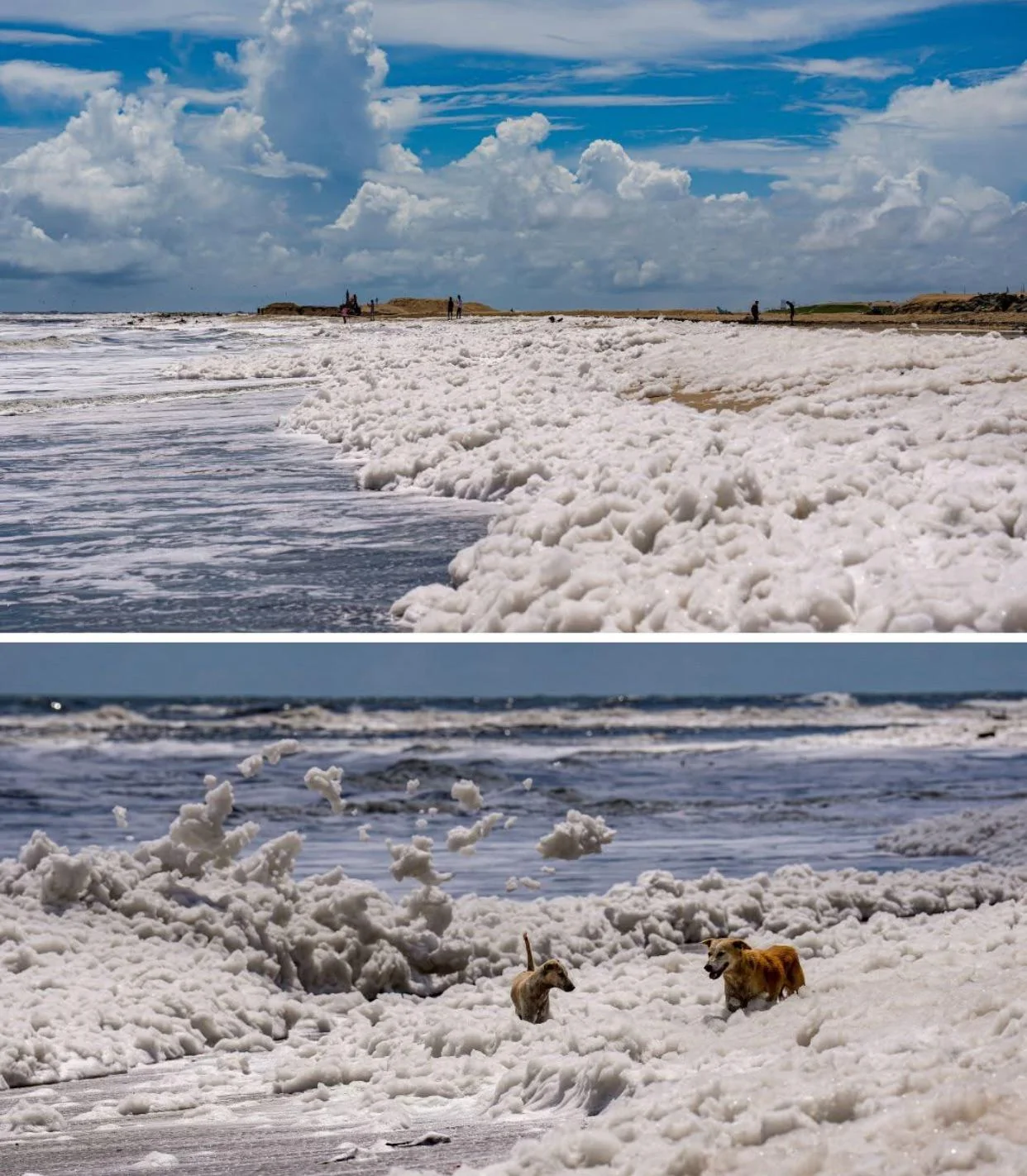
The shoreline looks frosted, a wind-sculpted blanket of bubbles racing up the sand. It smells faintly briny, pops softly underfoot, and makes some beachgoers wonder if a tanker of detergent spilled offshore. That froth is almost always a natural phenomenon—dramatic to behold, but rarely dangerous.
Coastal scientists have a simple name for it: sea foam. It forms when waves whip air into seawater rich with dissolved organic matter—mostly the broken-down remains of microscopic marine plants called phytoplankton. Under the right conditions, that organic “soup” becomes sturdy enough to hold bubbles, and surf piles them into dunes of cappuccino-like suds that can stretch for hundreds of yards.
What you’re seeing when the ocean turns sudsy
Phytoplankton live in vast numbers in the sunlit layer of the sea, blooming when sunlight, water temperature, and nutrients like nitrogen and phosphorus align. When those blooms wane, dead cells and other organic particles shed proteins and carbohydrates into the water. Those substances increase surface tension—exactly what bubbles need to form and persist.
Waves and wind then do the mechanical work. As breakers tumble, they trap air in the water and churn it with the dissolved organic matter, creating a mass of tiny bubbles. Strong onshore winds push that buoyant mix toward the beach, where it piles up in airy banks that can be knee-deep during storms.
Normal versus concerning foam: signs to watch
Typical sea foam is white to light tan and smells like the ocean—earthy, fishy, or simply salty. It often arrives alongside lines of driftwood, kelp, and other wrack left by high tides, another sign of energetic surf and abundant life offshore. In most cases, it’s a hallmark of a productive coastal ecosystem, not a red flag.
However, foam can sometimes signal other stories in the surf. During harmful algal blooms (HABs), certain species release toxins that can accumulate in shellfish and affect the food web. Foam itself is usually not the toxin source, but it can concentrate organic material at the surface. Likewise, if storm drains overflow or a sewage spill occurs, runoff may carry contaminants to the shore, where foam can mingle with or trap them.
Consider caution if you notice an oily rainbow sheen, a harsh chemical odor, or foam that’s unusually discolored—rusty brown, neon, or gray—especially after heavy rain near urban outfalls. Those are cues to avoid contact and to check local advisories from health or environmental agencies.
Is sea foam harmful to people or pets?
For most healthy beachgoers, brief skin contact with ordinary sea foam is harmless. Still, the bubbles can carry whatever is in the surf: bacteria, decaying algae, or fine sediment. People with sensitive skin may experience mild irritation, and the salt and organic material can sting eyes if blown onshore.
Dogs are more likely to lap or chew at foam, which is where risk rises. Vets and coastal agencies commonly advise keeping pets from ingesting seawater and foam, because both can concentrate salt and microbes and may cause gastrointestinal upset. During HABs or after spills, ingestion poses greater concern; it’s wise to keep pets leashed near dense foam and to rinse them with fresh water after a romp on the beach.
How scientists track blooms and beach conditions
Resource agencies and university labs monitor coastal waters for phytoplankton species, nutrients, and toxins. Satellite imagery helps spot large blooms offshore, while local sampling programs test shellfish and issue closures if toxins like domoic acid exceed safety thresholds. Citizen science groups sometimes collect water and beach wrack data that complement official monitoring.
Educational programs, including those from Oregon State University’s Sea Grant, explain the mechanics of sea foam: waves injecting air into organic-rich water, the role of proteins in bubble stability, and the seasonal timing of blooms that often peak in spring and summer. The takeaway is consistent: foam is a visible byproduct of a living ocean, not a sign someone dumped soap in the surf.
Quick checklist for beachgoers
- Look, sniff, and scan. Typical foam is white or tan and smells marine, not chemical. If the color looks off or the smell turns acrid, steer clear.
- Check recent conditions. Heavy rain can flush runoff to the coast; high surf can whip up deeper, more persistent foam. After storms, exercise extra caution near outfalls.
- Mind advisories. Before swimming or harvesting shellfish, consult state or county health departments for HAB alerts and beach water quality reports.
- Protect kids and pets. Avoid letting them swallow foam or seawater; rinse skin and fur with fresh water afterward.
- Report concerns. If you suspect pollution or see fish kills, oily sheens, or sewage smells, contact your local environmental hotline or non-emergency public works number.
Why we may be seeing more of it
Foam thrives on ingredients that are, in many places, becoming more common along coasts: warmer waters that favor certain blooms and nutrient-rich runoff from farms, lawns, and streets. Scientists have observed shifts in bloom timing and intensity as climate patterns change, which can translate to more frequent or more dramatic foam events in some regions.
The same drivers also increase the odds of harmful blooms in susceptible waters. That doesn’t mean every frothy day at the shore is cause for alarm, but it underscores the value of vigilant monitoring, resilient stormwater systems, and efforts to reduce nutrient pollution upstream.
Reading the shoreline
The beach is a ledger of wind, tide, and life. Foam stacks at the high-water mark hint at recent surf; bands of tan bubbles in the backwash trace where waves have been shaving organic-rich water into the air. Gulls work the edges for food, and bits of kelp snag in the suds like confetti—each detail a clue to what’s happening just beyond the breakers.
Next time you round a dune and find the sand draped in froth, resist the urge to assume the worst. Scan the color, catch the scent, and consider the weather. Most days, you’re looking at the ocean writing in bubbles about the feast it just hosted offshore. On the rare days it warns of something else, a little knowledge—and a rinse for the dog—go a long way.